

지식
AI
에이전트 리플렉션: 자기 평가와 반복 개선 패턴
AI 에이전트의 리플렉션 패턴(Self-Reflection, Multi-Agent Critic, Self-Debug)과 LangGraph 기반 Generator-Critic-Reviser 구현을 완전 해설합니다.
지난 글에서 ReAct, Plan-and-Execute 등 에이전트 플래닝 전략을 살펴봤다. 이번 글에서는 에이전트가 자신의 출력물을 평가하고 반복적으로 개선하는 리플렉션 패턴을 다룬다. 리플렉션은 단순한 계획 실행을 넘어 에이전트가 품질을 스스로 보장하게 한다.
리플렉션이란
리플렉션은 에이전트가 자신의 결과를 평가하고 개선점을 도출해 다시 시도하는 자기 개선 루프다. 인간이 초안을 작성하고 검토·수정하는 과정과 동일하다.
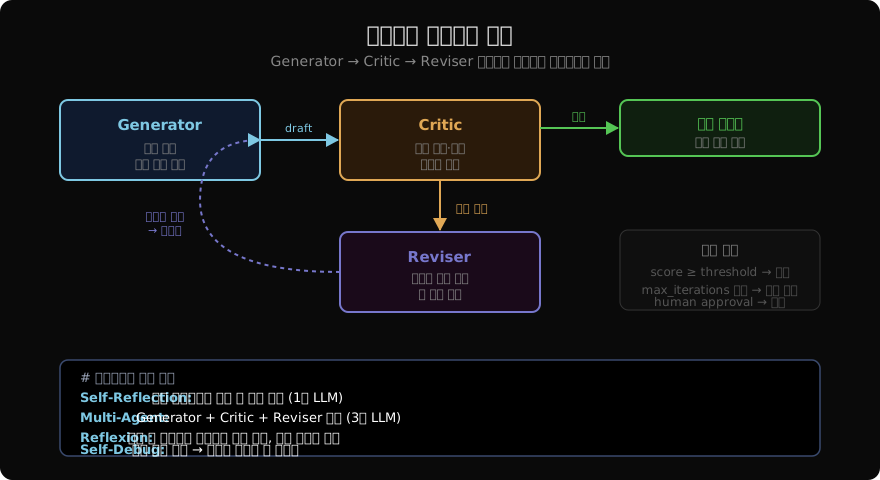
기본 구조:
- Generator: 초안 생성 (일반 도구 사용 에이전트)
- Critic: 초안 평가, 점수화, 개선점 도출
- Reviser: Critic 피드백으로 개선된 버전 생성
- 반복: Critic이 품질 기준을 충족할 때까지 2-3 반복
기본 Self-Reflection 구현
가장 단순한 형태: 하나의 LLM이 생성과 평가를 모두 담당한다.
from anthropic import Anthropic
from typing import Optional
import json

client = Anthropic()

def self_reflect_and_improve(
    task: str,
    max_iterations: int = 3,
    quality_threshold: float = 8.0,
) -> str:
    """Self-Reflection: 생성 → 자기 평가 → 개선 루프"""
    current_draft = ""
    history = []

    for iteration in range(max_iterations):
        # 1. 생성 (초기 또는 개선)
        if iteration == 0:
            gen_prompt = f"다음 태스크를 수행하세요:\n\n{task}"
        else:
            feedback_str = "\n".join(f"- {f}" for f in history[-1]["issues"])
            gen_prompt = f"""태스크: {task}

이전 버전:
{current_draft}

개선이 필요한 점:
{feedback_str}

위 피드백을 반영해 개선된 버전을 작성하세요."""

        gen_response = client.messages.create(
            model="claude-sonnet-4-6",
            max_tokens=2048,
            messages=[{"role": "user", "content": gen_prompt}],
        )
        current_draft = gen_response.content[0].text

        # 2. 자기 평가
        eval_prompt = f"""당신은 엄격한 품질 검토관입니다.
다음 결과물을 평가하고 JSON으로 반환하세요.

태스크: {task}

결과물:
{current_draft}

평가 기준 (각 0-10점):
- accuracy: 정확성·사실 오류 없음
- completeness: 태스크 요구사항 충족도
- clarity: 명확성·가독성
- quality: 전반적 품질

JSON 형식:
{{
  "scores": {{"accuracy": X, "completeness": X, "clarity": X, "quality": X}},
  "overall": X.X,
  "issues": ["문제점1", "문제점2"],
  "approved": true/false
}}"""

        eval_response = client.messages.create(
            model="claude-sonnet-4-6",
            max_tokens=512,
            messages=[{"role": "user", "content": eval_prompt}],
        )

        try:
            # JSON 파싱 (```json 블록 제거)
            eval_text = eval_response.content[0].text
            if "```json" in eval_text:
                eval_text = eval_text.split("```json")[1].split("```")[0]
            evaluation = json.loads(eval_text.strip())
        except Exception:
            evaluation = {"overall": 5.0, "issues": ["평가 파싱 실패"], "approved": False}

        overall_score = evaluation.get("overall", 0)
        history.append(evaluation)

        print(f"반복 {iteration + 1}: 점수 {overall_score:.1f}/10.0")

        if overall_score >= quality_threshold or evaluation.get("approved"):
            print(f"✅ 품질 기준 충족 (점수: {overall_score:.1f})")
            break
        elif iteration < max_iterations - 1:
            issues = evaluation.get("issues", [])
            print(f"  개선 필요: {', '.join(issues[:2])}")

    return current_draft

result = self_reflect_and_improve(
    task="Python 데코레이터를 초보자도 이해하기 쉽게 설명하고, 실용적인 예제를 2개 포함하세요.",
    max_iterations=3,
    quality_threshold=8.5,
)
print("\n최종 결과:\n", result[:500])
Multi-Agent Reflection: Generator + Critic 분리
Critic을 별도 LLM으로 분리하면 더 객관적인 평가가 가능하다.
from langgraph.graph import StateGraph, END
from typing import TypedDict, Annotated, Optional
import operator

class ReflectionState(TypedDict):
    task: str
    draft: str
    feedback: Optional[dict]
    revision_history: Annotated[list[str], operator.add]
    score: float
    iteration: int
    approved: bool

# Generator 노드
def generator_node(state: ReflectionState) -> dict:
    """초안 생성 또는 피드백 기반 수정"""
    from langchain_anthropic import ChatAnthropic
    from langchain_core.messages import HumanMessage, SystemMessage

    llm = ChatAnthropic(model="claude-sonnet-4-6", temperature=0.7)

    if state.get("feedback") and state["iteration"] > 0:
        issues = state["feedback"].get("issues", [])
        issues_str = "\n".join(f"- {issue}" for issue in issues)
        prompt = f"""태스크: {state['task']}

이전 버전:
{state['draft']}

Critic의 피드백:
{issues_str}

피드백을 모두 반영해 개선된 버전을 작성하세요."""
    else:
        prompt = f"다음 태스크를 수행하세요:\n\n{state['task']}"

    response = llm.invoke([HumanMessage(content=prompt)])
    return {
        "draft": response.content,
        "revision_history": [response.content],
        "iteration": state.get("iteration", 0) + 1,
    }

# Critic 노드
def critic_node(state: ReflectionState) -> dict:
    """초안 평가 및 피드백 생성"""
    from langchain_anthropic import ChatAnthropic
    from langchain_core.messages import HumanMessage
    import json

    critic_llm = ChatAnthropic(model="claude-sonnet-4-6", temperature=0)

    critic_prompt = f"""당신은 엄격한 콘텐츠 품질 관리자입니다.
다음 결과물을 평가하세요.

태스크: {state['task']}

결과물:
{state['draft']}

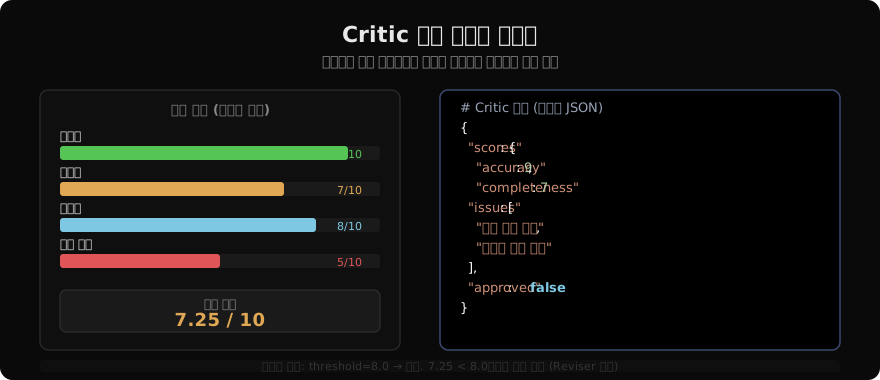
다음 기준으로 0-10점 평가 후 JSON 반환:
- accuracy: 사실 정확성
- completeness: 요구사항 완성도
- readability: 가독성
- examples: 예제 품질 (없으면 0)

{{
  "scores": {{"accuracy": X, "completeness": X, "readability": X, "examples": X}},
  "overall": X.X,
  "issues": ["개선 필요한 구체적 항목들"],
  "approved": true/false
}}

overall이 8.5 이상이면 approved: true."""

    response = critic_llm.invoke([HumanMessage(content=critic_prompt)])
    try:
        text = response.content
        if "```json" in text:
            text = text.split("```json")[1].split("```")[0]
        feedback = json.loads(text.strip())
    except Exception:
        feedback = {"overall": 6.0, "issues": ["평가 실패"], "approved": False}

    return {
        "feedback": feedback,
        "score": feedback.get("overall", 0),
        "approved": feedback.get("approved", False),
    }

# 조건부 엣지
def should_revise(state: ReflectionState) -> str:
    if state.get("approved"):
        return "done"
    if state.get("iteration", 0) >= 4:  # 최대 4회
        return "done"
    return "revise"

# 그래프 구성
reflection_graph = StateGraph(ReflectionState)
reflection_graph.add_node("generate", generator_node)
reflection_graph.add_node("critique", critic_node)

reflection_graph.set_entry_point("generate")
reflection_graph.add_edge("generate", "critique")
reflection_graph.add_conditional_edges(
    "critique",
    should_revise,
    {"revise": "generate", "done": END},
)

reflection_app = reflection_graph.compile()

# 실행
result = reflection_app.invoke({
    "task": "Big-O 표기법을 Python 개발자를 위해 설명하고, 리스트 조작의 시간 복잡도 예제를 포함하세요.",
    "draft": "", "feedback": None, "revision_history": [],
    "score": 0.0, "iteration": 0, "approved": False,
})

print(f"최종 점수: {result['score']:.1f}")
print(f"총 반복 수: {result['iteration']}")
print(f"\n최종 결과:\n{result['draft'][:400]}...")
Self-Debug: 코드 생성·실행·디버깅 루프
import subprocess
import sys
import tempfile
import os

def self_debug_code(task: str, max_attempts: int = 5) -> dict:
    """코드 생성 → 실행 → 오류 디버깅 자동화"""
    code = ""
    errors = []

    for attempt in range(max_attempts):
        # 코드 생성
        if attempt == 0:
            prompt = f"""다음을 수행하는 Python 코드를 작성하세요:
{task}

코드만 반환하세요 (설명 없이, ```python 없이)."""
        else:
            error_str = "\n".join(errors[-3:])  # 최근 3개 오류만
            prompt = f"""다음 코드에서 오류가 발생했습니다:

코드:
{code}

오류 메시지:
{error_str}

오류를 수정한 코드를 반환하세요 (코드만, 설명 없이)."""

        response = client.messages.create(
            model="claude-sonnet-4-6",
            max_tokens=1024,
            messages=[{"role": "user", "content": prompt}],
        )
        code = response.content[0].text.strip()
        if code.startswith("```"):
            code = "\n".join(code.split("\n")[1:-1])

        # 코드 실행
        with tempfile.NamedTemporaryFile(mode="w", suffix=".py", delete=False) as f:
            f.write(code)
            temp_path = f.name

        try:
            result = subprocess.run(
                [sys.executable, temp_path],
                capture_output=True, text=True, timeout=10,
            )
            os.unlink(temp_path)

            if result.returncode == 0:
                return {
                    "success": True,
                    "code": code,
                    "output": result.stdout,
                    "attempts": attempt + 1,
                }
            else:
                errors.append(result.stderr[:500])
                print(f"시도 {attempt + 1} 실패: {result.stderr[:100]}")
        except subprocess.TimeoutExpired:
            errors.append("실행 시간 초과 (10초)")
            os.unlink(temp_path)

    return {"success": False, "code": code, "attempts": max_attempts}

result = self_debug_code(
    "1부터 100까지 소수를 구하는 에라토스테네스의 체 알고리즘을 구현하고 출력하세요."
)
if result["success"]:
    print(f"✅ 성공 ({result['attempts']}회 시도)")
    print(result["output"])
리플렉션 패턴 선택 가이드
| 패턴 | 사용 사례 | 오버헤드 |
|---|---|---|
| Self-Reflection | 단순 글쓰기, 요약 | 낮음 (LLM 2배 호출) |
| Multi-Agent Critic | 고품질 콘텐츠 생성 | 중간 (별도 Critic) |
| Self-Debug | 코드 생성·실행 | 중간 (실행 환경 필요) |
| Reflexion | 복잡한 추론·계획 | 높음 (메모리 + 다중 시도) |
정리
리플렉션은 에이전트가 한 번의 시도로 끝나지 않고, 스스로 품질을 보장하게 한다:
- Self-Reflection: 동일 LLM이 생성과 평가를 담당, 구현 단순
- Multi-Agent Critic: Generator와 Critic을 분리해 더 객관적인 평가
- 구조화 피드백: JSON 스키마로 점수와 이슈를 수치화해 자동 종료 조건 설정
- Self-Debug: 코드 실행 오류를 자동으로 감지하고 수정하는 루프
- LangGraph 통합:
generate → critique → [revise/done]조건부 그래프로 자연스럽게 표현
리플렉션의 핵심은 명확한 평가 기준과 종료 조건이다. 임계값 없이 무한 반복하면 비용과 시간이 낭비된다.
지난 글: 에이전트 플래닝: ReAct, Plan-and-Execute, Reflexion 전략
다음 글: 에이전트 평가: 성능 측정과 벤치마킹 방법론
읽어주셔서 감사합니다. 😊