

지식
Algorithm
단일 연결 리스트
노드와 포인터로 구성된 단일 연결 리스트의 구조, 삽입·삭제·역전 알고리즘을 Python으로 직접 구현합니다.
지난 글에서 동적 배열을 구현해봤습니다. 배열은 인덱스 접근이 빠르지만 중간 삽입·삭제가 느립니다. 단일 연결 리스트(Singly Linked List)는 이 약점을 보완하는 대표적인 자료구조입니다.
연결 리스트란
연결 리스트는 노드(Node)들이 포인터로 연결된 자료구조입니다. 각 노드는 데이터와 다음 노드를 가리키는 포인터를 가집니다. 배열과 달리 메모리가 연속적이지 않아도 됩니다.
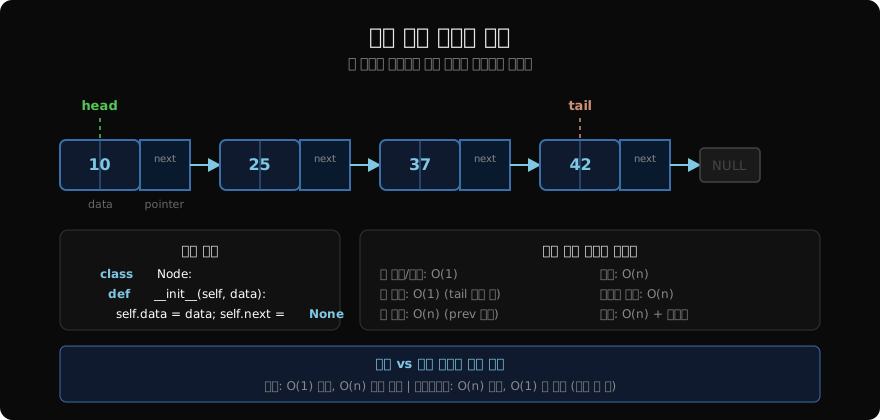
class Node:
    def __init__(self, data):
        self.data = data
        self.next = None   # 다음 노드 포인터

class SinglyLinkedList:
    def __init__(self):
        self.head = None   # 첫 번째 노드
        self.tail = None   # 마지막 노드 (선택적)
        self._size = 0
기본 연산 구현
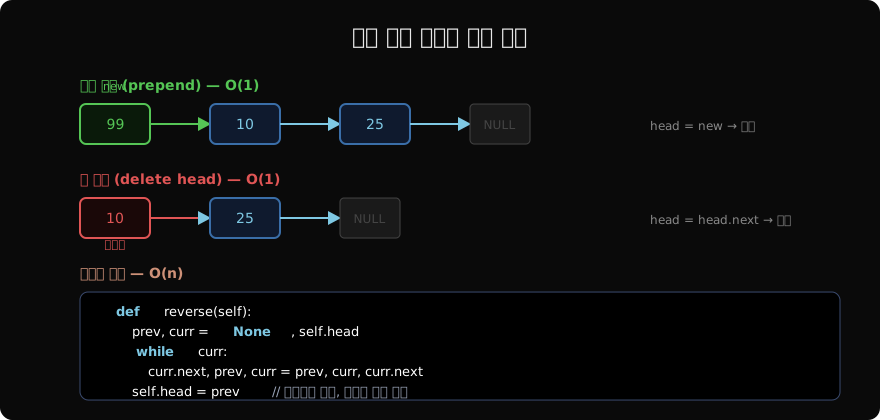
앞에 삽입 (prepend) — O(1)
def prepend(self, data):
    new_node = Node(data)
    new_node.next = self.head   # 새 노드 → 기존 head
    self.head = new_node         # head 갱신
    if self.tail is None:
        self.tail = new_node
    self._size += 1
뒤에 삽입 (append) — O(1) with tail pointer
def append(self, data):
    new_node = Node(data)
    if self.tail is None:
        self.head = self.tail = new_node
    else:
        self.tail.next = new_node  # 기존 tail → 새 노드
        self.tail = new_node        # tail 갱신
    self._size += 1
tail 포인터를 유지하지 않으면 뒤 삽입이 O(n)이 됩니다. 반드시 tail을 관리하세요.
앞 삭제 (delete head) — O(1)
def delete_head(self):
    if self.head is None:
        raise IndexError("빈 리스트")
    data = self.head.data
    self.head = self.head.next    # head를 한 칸 앞으로
    if self.head is None:
        self.tail = None
    self._size -= 1
    return data
뒤 삭제 — O(n): 단일 연결 리스트의 약점
def delete_tail(self):
    if self.head is None:
        raise IndexError("빈 리스트")
    if self.head is self.tail:
        data = self.head.data
        self.head = self.tail = None
        self._size -= 1
        return data
    # tail 이전 노드를 찾기 위해 전체 순회 필요 — O(n)
    curr = self.head
    while curr.next is not self.tail:
        curr = curr.next
    data = self.tail.data
    curr.next = None
    self.tail = curr
    self._size -= 1
    return data
이것이 단일 연결 리스트의 핵심 단점입니다. 이전(prev) 포인터가 없어서 tail 삭제가 O(n)입니다.
리스트 역전 — O(n)
def reverse(self):
    prev, curr = None, self.head
    self.tail = self.head   # 현재 head가 역전 후 tail
    while curr:
        curr.next, prev, curr = prev, curr, curr.next
    self.head = prev
포인터만 변경하므로 데이터 복사 없이 O(n)에 역전됩니다.
전체 구현
class SinglyLinkedList:
    def __init__(self):
        self.head = self.tail = None
        self._size = 0

    def __len__(self):
        return self._size

    def __iter__(self):
        curr = self.head
        while curr:
            yield curr.data
            curr = curr.next

    def search(self, target):       # O(n)
        curr = self.head
        idx = 0
        while curr:
            if curr.data == target:
                return idx
            curr = curr.next
            idx += 1
        return -1

    def delete_value(self, val):    # O(n)
        if self.head is None:
            return False
        if self.head.data == val:
            self.delete_head()
            return True
        curr = self.head
        while curr.next:
            if curr.next.data == val:
                if curr.next is self.tail:
                    self.tail = curr
                curr.next = curr.next.next
                self._size -= 1
                return True
            curr = curr.next
        return False
복잡도 요약
| 연산 | 복잡도 |
|---|---|
| 앞 삽입/삭제 | O(1) |
| 뒤 삽입 (tail 유지) | O(1) |
| 뒤 삭제 | O(n) |
| 중간 삽입 (위치 알 때) | O(1) (포인터 연결만) |
| 탐색 | O(n) |
| 인덱스 접근 | O(n) |
연결 리스트가 배열보다 유리한 경우
- 앞쪽에 빈번한 삽입/삭제: 배열은 O(n) 이동이 필요하지만 연결 리스트는 O(1)
- 크기를 모를 때: 배열처럼 확장 복사 없이 노드를 그냥 추가
- 중간 위치에서 이미 노드 포인터를 가질 때: 연결만 바꾸면 O(1) 삽입
반면 배열이 유리한 경우: 인덱스 접근(O(1)), 캐시 효율이 중요한 순차 처리.
실전 응용
# 연결 리스트로 스택 구현 (배열 대비 앞 push가 O(1))
class Stack:
    def __init__(self):
        self.list = SinglyLinkedList()

    def push(self, val):
        self.list.prepend(val)   # O(1)

    def pop(self):
        return self.list.delete_head()  # O(1)

    def peek(self):
        return self.list.head.data

# Python의 deque는 이중 연결 리스트로 구현
from collections import deque
dq = deque()
dq.appendleft(1)   # O(1)
dq.popleft()       # O(1)
정리
- 단일 연결 리스트 = 노드(data + next 포인터)의 체인
- head 포인터로 시작, tail 포인터 유지 시 뒤 삽입 O(1)
- 앞 삽입/삭제 O(1) vs 뒤 삭제/탐색 O(n)
- 역전은 포인터만 변경 — O(n), 공간 O(1)
지난 글: 동적 배열
다음 글: 이중 연결 리스트
읽어주셔서 감사합니다. 😊
PALDYN / ARTICLE AI
글의 개념, 수식, 코드에 대해 물어보세요.
질문과 관련된 문단을 골라 답변의 문맥으로 사용합니다.생각 중 · 0초