

지식
Java
내장 함수형 인터페이스 — Function·Consumer·Supplier·Predicate
java.util.function 패키지의 43개 내장 함수형 인터페이스 완전 정리 — Function·Consumer·Supplier·Predicate의 추상 메서드·기본 메서드·조합 패턴, UnaryOperator·BinaryOperator, 기본형 특화 IntFunction·ToIntFunction·IntConsumer 등, 언제 커스텀 함수형 인터페이스를 만들어야 하는지
지난 글에서 메서드 참조의 4가지 유형을 익혔다. 메서드 참조와 람다를 실제로 활용하려면 어떤 함수형 인터페이스를 쓸지 알아야 한다. Java는 java.util.function 패키지에 43개의 내장 함수형 인터페이스를 제공한다. 이 글에서는 그 핵심인 4종류를 깊이 이해한다.
4대 핵심 인터페이스
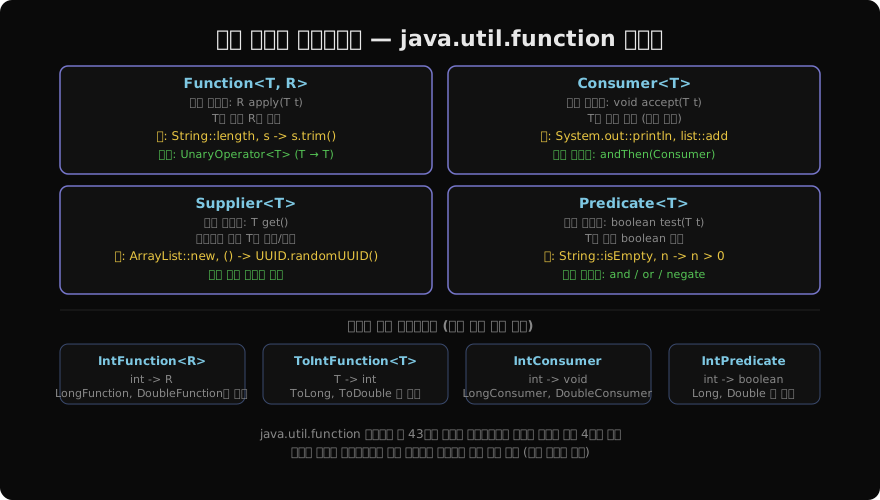
| 인터페이스 | 추상 메서드 | 용도 |
|---|---|---|
Function<T, R> | R apply(T t) | T를 받아 R로 변환 |
Consumer<T> | void accept(T t) | T를 받아 소비 (반환 없음) |
Supplier<T> | T get() | 아무것도 받지 않고 T 공급 |
Predicate<T> | boolean test(T t) | T를 받아 boolean 반환 |
Function<T, R> — 변환
// 기본 사용
Function<String, Integer> toLength = String::length;
toLength.apply("hello");  // 5

// andThen — f 먼저, g 나중
Function<String, Integer> strToLen = String::length;
Function<Integer, String> intToStr = Object::toString;
Function<String, String> strLenStr = strToLen.andThen(intToStr);
strLenStr.apply("hello");  // "5"

// compose — g 먼저, f 나중
Function<Integer, Integer> times2 = n -> n * 2;
Function<Integer, Integer> plus3  = n -> n + 3;
Function<Integer, Integer> plus3ThenTimes2 = times2.compose(plus3);
plus3ThenTimes2.apply(5);  // (5+3)*2 = 16

// identity — 입력을 그대로 반환
Function<String, String> identity = Function.identity();
UnaryOperator<T>
Function<T, T>의 특화형이다. 입력과 출력 타입이 같을 때 사용한다.
UnaryOperator<String> trim = String::trim;
UnaryOperator<Integer> negate = n -> -n;

// List.replaceAll()이 UnaryOperator를 받음
List<String> list = new ArrayList<>(List.of("  hello  ", "  world  "));
list.replaceAll(String::trim);  // [hello, world]
Consumer<T> — 소비
// 기본 사용
Consumer<String> print = System.out::println;
print.accept("hello");  // hello 출력

// andThen — 두 Consumer를 순서대로 실행
Consumer<String> log = s -> logger.info(s);
Consumer<String> print2 = System.out::println;
Consumer<String> logAndPrint = log.andThen(print2);
logAndPrint.accept("event");  // 로그 후 출력

// 실전: forEach
list.forEach(System.out::println);
map.forEach((k, v) -> System.out.println(k + "=" + v));  // BiConsumer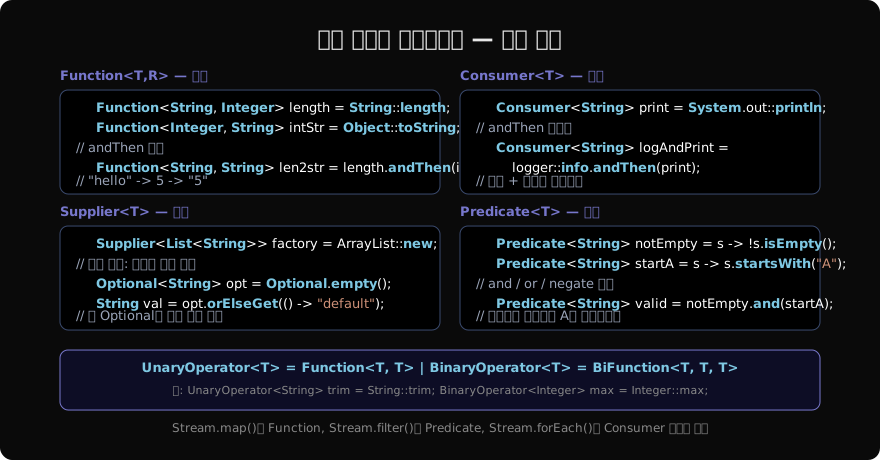
Supplier<T> — 공급
// 기본 사용
Supplier<LocalDate> today = LocalDate::now;
today.get();  // 현재 날짜

// 지연 초기화 — 필요할 때만 생성
Supplier<List<String>> listFactory = ArrayList::new;
List<String> list = listFactory.get();  // 새 ArrayList 생성

// Optional.orElseGet — 값이 없을 때만 Supplier 실행
Optional<String> opt = Optional.empty();
String val = opt.orElseGet(() -> computeExpensiveDefault());  // 비어 있을 때만 실행

// vs orElse — 항상 평가됨
String val2 = opt.orElse(computeExpensiveDefault()); // 항상 실행 (비효율)orElseGet(Supplier)는 orElse(T)와 다르게 실제로 값이 없을 때만 람다를 실행한다. 비용이 큰 연산에는 반드시 orElseGet을 써야 한다.
Predicate<T> — 조건 검사
// 기본 사용
Predicate<String> notEmpty = s -> !s.isEmpty();
notEmpty.test("hello");  // true
notEmpty.test("");       // false

// and — 단락 평가 (첫번째가 false면 두번째 미실행)
Predicate<String> notNull = Objects::nonNull;
Predicate<String> valid = notNull.and(notEmpty);

// or — 단락 평가 (첫번째가 true면 두번째 미실행)
Predicate<String> isNull = Objects::isNull;
Predicate<String> isBlank = String::isBlank;
Predicate<String> invalid = isNull.or(isBlank);

// negate — 반전
Predicate<String> hasContent = invalid.negate();

// Java 11+ Predicate.not
List<String> nonBlank = list.stream()
    .filter(Predicate.not(String::isBlank))
    .collect(toList());

// 실전: 다중 조건 조합
Predicate<User> eligible = user ->
    user.getAge() >= 18 &&
    user.isActive() &&
    user.hasVerifiedEmail();
// 위보다 조합이 더 읽기 좋을 때
Predicate<User> adultP = u -> u.getAge() >= 18;
Predicate<User> activeP = User::isActive;
Predicate<User> verifiedP = User::hasVerifiedEmail;
list.stream().filter(adultP.and(activeP).and(verifiedP)).collect(toList());
기본형 특화 인터페이스
박싱/언박싱 비용을 줄이기 위한 기본형 특화 버전이 있다.
// Function 기본형 특화
IntFunction<String> intToStr = n -> String.valueOf(n);
ToIntFunction<String> strToInt = Integer::parseInt;
IntUnaryOperator doubleIt = n -> n * 2;

// Consumer 기본형 특화
IntConsumer printInt = System.out::println;
DoubleConsumer formatter = d -> System.out.printf("%.2f%n", d);

// Predicate 기본형 특화
IntPredicate isPositive = n -> n > 0;
LongPredicate isEven = n -> n % 2 == 0;

// 실전 사용
int[] ints = {1, 2, 3, 4, 5};
int sum = IntStream.of(ints)
    .filter(isPositive)        // IntPredicate
    .map(doubleIt)             // IntUnaryOperator
    .sum();
BinaryOperator — 두 값을 받아 같은 타입 반환
// BinaryOperator<T> = BiFunction<T, T, T>
BinaryOperator<Integer> add = Integer::sum;
BinaryOperator<Integer> max = Integer::max;

// Stream.reduce와 함께
Optional<Integer> sum = list.stream().reduce(Integer::sum);
int total = list.stream().reduce(0, Integer::sum);
커스텀 함수형 인터페이스는 언제?
내장 인터페이스로 부족한 경우에만 직접 만든다.
// 이 경우는 직접 만들지 않아도 됨
// Function<String, Integer> 으로 충분
@FunctionalInterface
interface StringToInt {
    int convert(String s);  // 불필요
}

// 이 경우는 직접 만들 이유가 있음
// 파라미터 3개 필요 (표준에 없음)
@FunctionalInterface
interface TriFunction<A, B, C, R> {
    R apply(A a, B b, C c);
}

// 체크 예외를 던지는 함수 (표준은 체크 예외 미지원)
@FunctionalInterface
interface ThrowingSupplier<T> {
    T get() throws Exception;
}
지난 글: 메서드 참조 — 4가지 유형 완전 정리
다음 글: BiFunction·BiPredicate·BiConsumer — 두 입력 처리
읽어주셔서 감사합니다. 😊
PALDYN / ARTICLE AI
글의 개념, 수식, 코드에 대해 물어보세요.
질문과 관련된 문단을 골라 답변의 문맥으로 사용합니다.생각 중 · 0초