

프라이빗 필드 — # 접두사로 구현하는 캡슐화
JavaScript ES2022 프라이빗 클래스 필드(#)와 프라이빗 메서드의 동작, 기존 WeakMap 패턴과의 차이, 그리고 실무 캡슐화 설계 전략을 설명합니다.
지난 글에서 클래스 레벨 공유 상태를 다루는 static 멤버를 살펴봤습니다. 이번에는 반대 방향, 즉 외부에서 절대 접근할 수 없는 진정한 프라이빗 상태를 만드는 방법을 다룹니다. ES2022에서 표준화된 # 접두사 문법은 언어 수준에서 강제하는 캡슐화를 제공합니다.
등장 배경 — 과거의 관례적 private
ES2022 이전에 JavaScript에는 공식적인 프라이빗 필드가 없었습니다. 개발자들은 관례(언더스코어)나 WeakMap을 사용했습니다.
// 관례: _prefix (실제로는 접근 가능)
class OldStyle {
  constructor() {
    this._secret = 'not really private';
  }
}
const o = new OldStyle();
console.log(o._secret); // 'not really private' (노출됨)

// WeakMap 패턴 (진짜 숨김, 그러나 복잡)
const _data = new WeakMap();
class WithWeakMap {
  constructor(v) { _data.set(this, v); }
  get() { return _data.get(this); }
}
WeakMap 패턴은 효과적이지만 외부 변수(_data)가 필요하고, 클래스 정의가 복잡해집니다.
# 문법 — 언어 수준 프라이빗
ES2022부터 # 접두사를 붙이면 클래스 문법 자체가 접근을 차단합니다.
class Stack {
  #items = [];

  push(item) {
    this.#items.push(item);
  }

  pop() {
    return this.#items.pop();
  }

  get size() {
    return this.#items.length;
  }
}
외부에서 #items에 접근하려 하면 파싱 단계에서 SyntaxError가 발생합니다.
const s = new Stack();
s.push(1);
s.push(2);
console.log(s.size);  // 2
console.log(s.#items); // SyntaxError: Private field '#items' must be
                        // declared in an enclosing class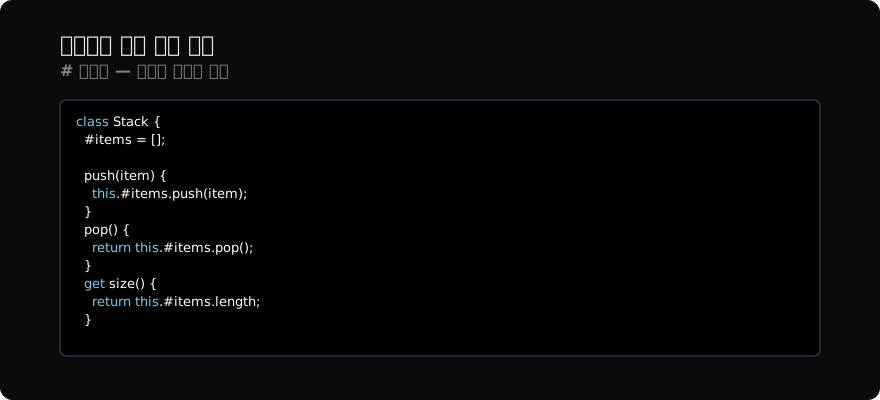
# 필드의 특성
반드시 선언 먼저
# 필드는 클래스 몸체에서 반드시 선언해야 합니다. 생성자에서 this.#newField = 1처럼 동적으로 추가할 수 없습니다.
class A {
  #declared = 0; // ✓

  method() {
    this.#declared++;     // ✓
    this.#undeclared = 1; // SyntaxError: 선언 없이 사용
  }
}
in 연산자로 존재 확인
in 연산자를 사용해 객체가 특정 프라이빗 필드를 가지고 있는지 확인할 수 있습니다 (ES2022+).
class Point {
  #x; #y;

  constructor(x, y) { this.#x = x; this.#y = y; }

  static isPoint(obj) {
    return #x in obj; // 안전하게 확인
  }
}

console.log(Point.isPoint(new Point(0, 0))); // true
console.log(Point.isPoint({ x: 0, y: 0 })); // false
서브클래스에서 접근 불가
부모의 #field는 서브클래스에서도 직접 접근할 수 없습니다.
class Parent {
  #value = 42;
  getValue() { return this.#value; } // 공개 메서드로 노출
}

class Child extends Parent {
  showValue() {
    // this.#value; // SyntaxError
    return this.getValue(); // 공개 메서드 통해 접근
  }
}
프라이빗 메서드와 getter/setter
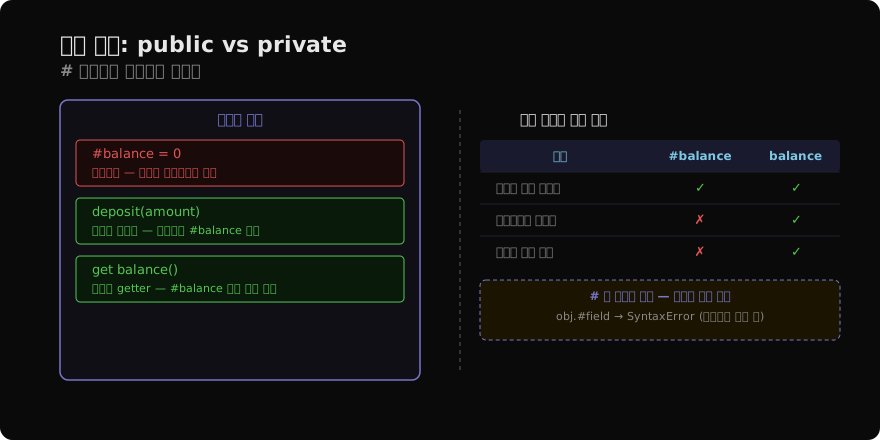
필드뿐 아니라 메서드와 getter/setter도 #로 비공개로 만들 수 있습니다.
class BankAccount {
  #balance = 0;
  #log = [];

  #record(type, amount) {
    this.#log.push({ type, amount, time: Date.now() });
  }

  deposit(amount) {
    if (amount <= 0) throw new RangeError('양수만 입금 가능');
    this.#balance += amount;
    this.#record('deposit', amount);
  }

  get balance() { return this.#balance; }
  get history() { return [...this.#log]; }
}#record는 내부 구현 세부사항이므로 외부에 노출할 필요가 없습니다. 이처럼 퍼블릭 API와 내부 구현을 명확히 분리하면 나중에 #record 로직을 변경해도 외부 코드에 영향을 주지 않습니다.
WeakMap 패턴과의 비교
| 항목 | # 문법 | WeakMap 패턴 |
|---|---|---|
| 문법 복잡도 | 낮음 | 높음 |
| 성능 | 좋음 | WeakMap 조회 비용 |
| 외부 접근 차단 | SyntaxError | 가능 (스코프 내 WeakMap 있으면) |
| 상속 접근 | 불가 | WeakMap을 공유하면 가능 |
| 직렬화 (JSON) | 제외됨 | 제외됨 |
| 디버거 노출 | 클래스 내 보임 | 보이지 않음 |
현대 코드에서는 # 문법이 훨씬 권장됩니다.
직렬화와 프라이빗 필드
JSON.stringify는 # 필드를 포함하지 않습니다. 명시적으로 toJSON() 메서드를 구현해야 합니다.
class User {
  #password;

  constructor(name, password) {
    this.name = name;
    this.#password = password;
  }

  toJSON() {
    return { name: this.name }; // password 제외
  }
}

const u = new User('Alice', 'secret');
JSON.stringify(u); // '{"name":"Alice"}'
실무 설계 원칙
프라이빗 필드를 도입할 때 유용한 원칙들입니다.
- 최소 공개(minimal API): 꼭 필요한 것만 public으로 노출합니다.
- 불변 공개 API: getter만 제공하고 setter를 숨겨 외부에서 직접 수정을 막습니다.
- 내부 유효성 검사: setter나 메서드 내부에서 검증 후
#field를 업데이트합니다.
class Temperature {
  #celsius;

  constructor(celsius) {
    this.#validate(celsius);
    this.#celsius = celsius;
  }

  #validate(c) {
    if (c < -273.15) throw new RangeError('절대영도 이하');
  }

  get celsius() { return this.#celsius; }
  get fahrenheit() { return this.#celsius * 9/5 + 32; }
}
모든 유효성 검사가 클래스 안에 캡슐화되어, 외부에서는 항상 유효한 Temperature 인스턴스를 보장받습니다.
지난 글: 정적 멤버 — 클래스 레벨 프로퍼티와 메서드
다음 글: 클래스 getter/setter — 계산된 프로퍼티 설계
읽어주셔서 감사합니다. 😊
PALDYN / ARTICLE AI
글의 개념, 수식, 코드에 대해 물어보세요.
질문과 관련된 문단을 골라 답변의 문맥으로 사용합니다.생각 중 · 0초