

Proxy와 Reflect
JavaScript Proxy의 13가지 트랩으로 객체 동작을 가로채고 커스터마이징하는 방법과, 기본 동작을 안전하게 위임하는 Reflect API를 실용 패턴과 함께 설명합니다.
지난 글에서 Symbol의 다양한 활용 패턴을 살펴봤습니다. 이번 글에서는 JavaScript 메타프로그래밍의 핵심인 Proxy와 Reflect를 다룹니다. Proxy는 객체의 근본적인 동작(속성 읽기·쓰기·삭제·함수 호출 등)을 가로채고 재정의할 수 있는 강력한 도구입니다.
Proxy 기본 구조
const proxy = new Proxy(target, handler);target: 감쌀 대상 객체(또는 함수)handler: 가로챌 동작(트랩)을 정의하는 객체
핸들러가 비어 있으면 모든 동작이 target에 그대로 전달됩니다.
const target = { name: 'Alice' };
const proxy = new Proxy(target, {});

proxy.name;      // 'Alice' — target에 그대로 전달
proxy.age = 30;  // target.age = 30
트랩(Trap) 종류
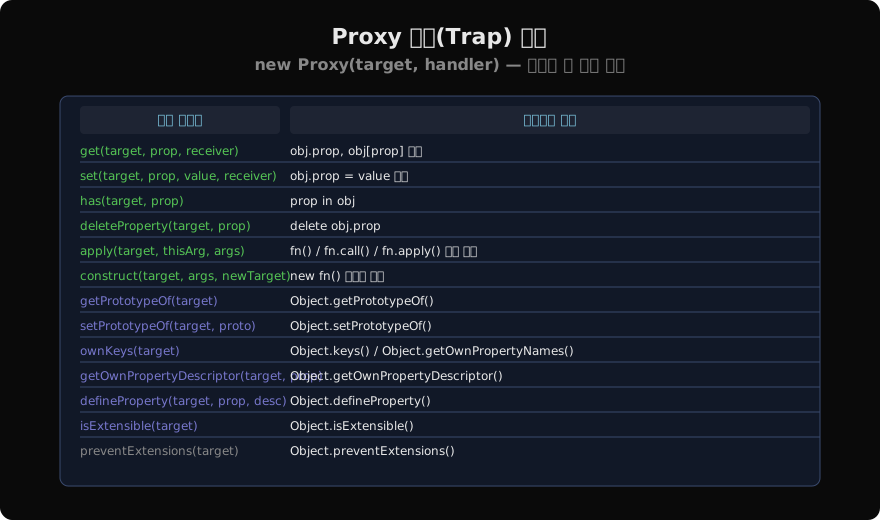
가장 자주 쓰이는 트랩은 get과 set입니다.
get 트랩 — 속성 읽기 가로채기
const handler = {
  get(target, prop, receiver) {
    console.log(`[get] ${String(prop)}`);
    return Reflect.get(target, prop, receiver);
  },
};

const proxy = new Proxy({ x: 1, y: 2 }, handler);
proxy.x; // [get] x → 1
존재하지 않는 속성에 기본값을 제공하는 패턴입니다.
const withDefaults = new Proxy({}, {
  get(target, prop) {
    return prop in target ? target[prop] : `[${String(prop)} 없음]`;
  },
});

withDefaults.name;    // '[name 없음]'
withDefaults.age = 25;
withDefaults.age;     // 25
set 트랩 — 유효성 검사
function createValidated(schema) {
  return new Proxy({}, {
    set(target, prop, value, receiver) {
      const validator = schema[prop];
      if (validator && !validator(value)) {
        throw new TypeError(`유효하지 않은 값: ${String(prop)} = ${value}`);
      }
      return Reflect.set(target, prop, value, receiver);
    },
  });
}

const user = createValidated({
  age: v => Number.isInteger(v) && v >= 0 && v <= 150,
  name: v => typeof v === 'string' && v.length > 0,
});

user.name = 'Alice';  // OK
user.age = 30;        // OK
user.age = -1;        // TypeError: 유효하지 않은 값: age = -1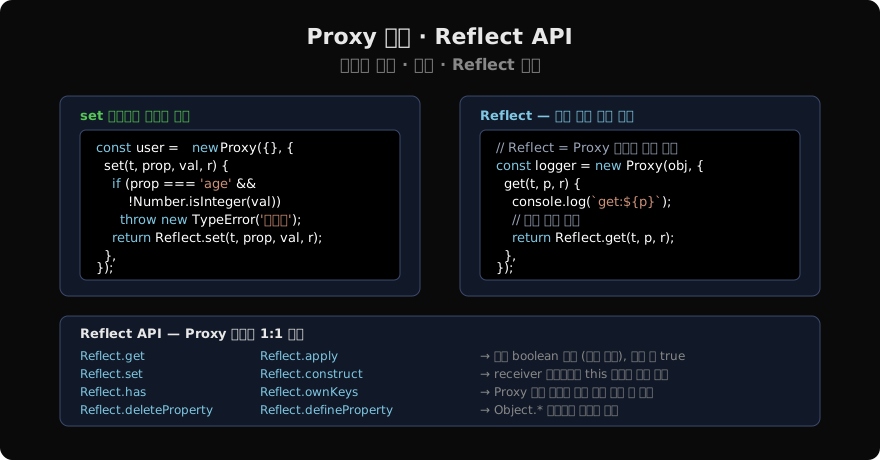
apply 트랩 — 함수 호출 가로채기
apply 트랩은 함수에 Proxy를 적용할 때 사용합니다.
function sum(a, b) { return a + b; }

const timedSum = new Proxy(sum, {
  apply(target, thisArg, args) {
    const start = performance.now();
    const result = Reflect.apply(target, thisArg, args);
    console.log(`실행 시간: ${performance.now() - start}ms`);
    return result;
  },
});

timedSum(1, 2); // 실행 시간: 0.02ms → 3
Reflect API
Reflect는 Proxy 트랩과 1:1 대응하는 정적 메서드 모음입니다. 트랩 내부에서 기본 동작을 수행할 때 Reflect를 사용합니다. Object.* 메서드의 함수형 대안이기도 합니다.
const obj = { a: 1 };

// Object 메서드 vs Reflect
Object.defineProperty(obj, 'b', { value: 2, writable: false });
Reflect.defineProperty(obj, 'c', { value: 3, writable: false }); // true/false 반환 (예외 없음)

Reflect.has(obj, 'a');       // true (in 연산자)
Reflect.ownKeys(obj);        // ['a', 'b', 'c']
Reflect.deleteProperty(obj, 'a'); // trueReflect.set과 Reflect.get은 receiver 매개변수로 this를 정확히 바인딩해 getter/setter 체인에서 발생하는 문제를 방지합니다.
반응형 데이터 시스템 (간단 구현)
Proxy의 get/set 트랩으로 의존성 추적과 알림을 구현할 수 있습니다.
function reactive(obj, onChange) {
  return new Proxy(obj, {
    set(target, prop, value, receiver) {
      const oldValue = target[prop];
      const result = Reflect.set(target, prop, value, receiver);
      if (oldValue !== value) onChange(prop, oldValue, value);
      return result;
    },
  });
}

const state = reactive({ count: 0 }, (prop, old, next) => {
  console.log(`${prop}: ${old} → ${next}`);
});

state.count++;   // count: 0 → 1
state.count++;   // count: 1 → 2
Vue 3는 이 패턴을 기반으로 반응형 시스템을 구현합니다.
has 트랩 — in 연산자 재정의
const range = new Proxy({ min: 1, max: 10 }, {
  has(target, prop) {
    const n = Number(prop);
    return n >= target.min && n <= target.max;
  },
});

5 in range;  // true
11 in range; // false
Proxy의 한계와 주의사항
- 성능: 모든 접근에 트랩을 통과하므로 Hot Path에서 남용하면 성능 저하.
===비교:proxy !== target. 동일성 비교가 필요하면 원본 참조를 별도로 유지.- 내부 슬롯:
Map,Set같은 내장 타입은 내부 슬롯([[MapData]] 등)에 직접 접근하므로 단순 래핑이 작동하지 않음.bind(target)등 우회 필요. - 취소 가능 Proxy:
Proxy.revocable(target, handler)로 생성하고revoke()를 호출하면 이후 접근이TypeError를 던짐.
const { proxy, revoke } = Proxy.revocable({ secret: 42 }, {});
proxy.secret; // 42
revoke();
proxy.secret; // TypeError: Cannot perform 'get' on a proxy that has been revoked
다음 글에서는 논리 할당 연산자(??=, &&=, ||=)와 숫자 구분자를 포함한 최신 JavaScript 편의 문법을 살펴봅니다.
지난 글: Symbol 활용 패턴
다음 글: 논리 할당 연산자
읽어주셔서 감사합니다. 😊
PALDYN / ARTICLE AI
글의 개념, 수식, 코드에 대해 물어보세요.
질문과 관련된 문단을 골라 답변의 문맥으로 사용합니다.생각 중 · 0초