

지식
AI
LLM 시맨틱 캐시: 반복 요청 비용 제로화 전략
Exact Cache·시맨틱 캐시·프롬프트 캐시를 다층으로 쌓아 LLM 응답 비용을 줄이는 캐싱 아키텍처를 구체적인 구현 코드와 함께 다룹니다.
지난 글에서 LLM 비용 구조와 최적화 전략을 살펴봤다. 그 중 캐싱은 단연 가장 극적인 효과를 낸다. 이번 글에서는 세 종류의 캐시를 계층적으로 구성하는 다층 LLM 캐시 아키텍처를 구현 코드와 함께 상세히 다룬다.
LLM 서비스의 트래픽을 분석하면 흥미로운 패턴이 나타난다. 사용자 질문의 상당수는 의미적으로 중복된다. FAQ 챗봇이라면 “환불 정책이 뭔가요?”와 “환불은 어떻게 하나요?”는 사실상 같은 답변을 원한다. 이 반복 요청에 매번 LLM API를 호출하는 것은 낭비다.
다층 캐시 아키텍처
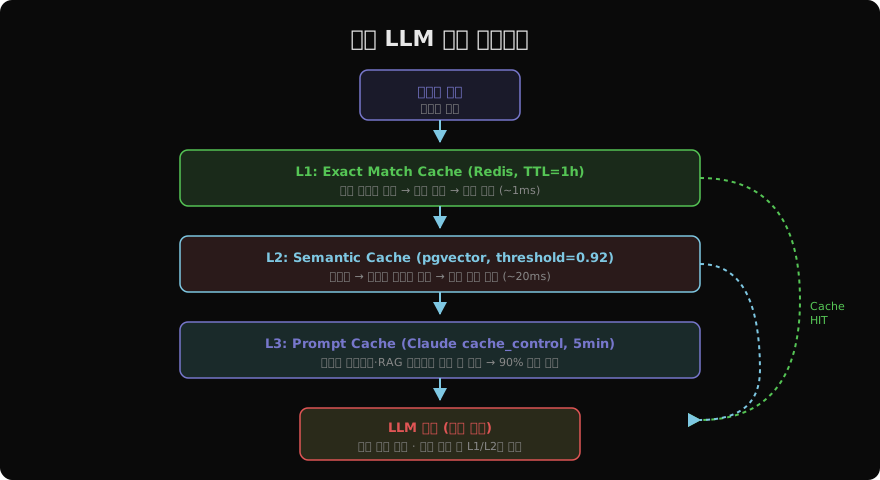
세 계층의 캐시를 순서대로 통과한다. 앞 단계에서 히트하면 후속 단계를 건너뛴다.
- L1 (Exact Cache): 해시 기반 완전 일치. 응답시간 1ms 이하, 비용 0
- L2 (Semantic Cache): 임베딩 기반 의미 유사도. 응답시간 10~30ms, 비용 0
- L3 (Prompt Cache): Claude 서버 측 프롬프트 캐싱. LLM 호출은 하지만 토큰 비용 90% 절감
L1: Redis Exact Cache
import redis
import hashlib
import json
from typing import Optional

class ExactCache:
    def __init__(self, ttl_seconds: int = 3600):
        self.r = redis.Redis(host="localhost", port=6379, decode_responses=True)
        self.ttl = ttl_seconds

    def _key(self, prompt: str, model: str) -> str:
        content = f"{model}:{prompt}"
        return f"llm:exact:{hashlib.sha256(content.encode()).hexdigest()}"

    def get(self, prompt: str, model: str) -> Optional[str]:
        val = self.r.get(self._key(prompt, model))
        return json.loads(val) if val else None

    def set(self, prompt: str, model: str, response: str):
        key = self._key(prompt, model)
        self.r.setex(key, self.ttl, json.dumps(response))
L2: 시맨틱 캐시
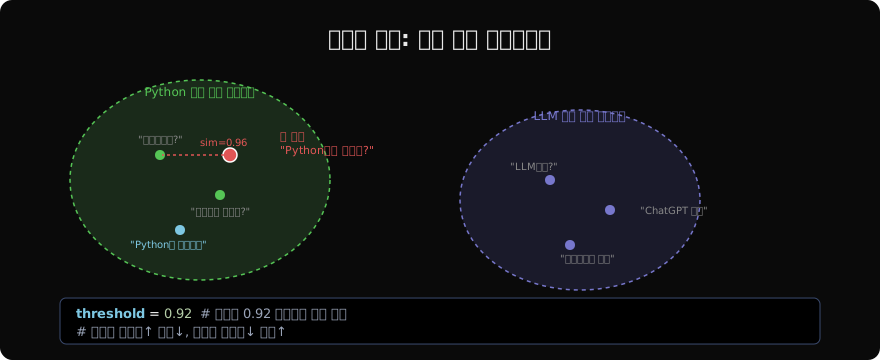
시맨틱 캐시는 임베딩 벡터 유사도를 사용해 의미가 같은 질문을 탐지한다.
import numpy as np
from sentence_transformers import SentenceTransformer
import psycopg2
from psycopg2.extras import execute_values

class SemanticCache:
    def __init__(self, threshold: float = 0.92, ttl_hours: int = 24):
        self.model = SentenceTransformer("paraphrase-multilingual-MiniLM-L12-v2")
        self.threshold = threshold
        self.conn = psycopg2.connect("postgresql://localhost/llmcache")
        self._init_table()

    def _init_table(self):
        with self.conn.cursor() as cur:
            cur.execute("""
                CREATE TABLE IF NOT EXISTS semantic_cache (
                    id SERIAL PRIMARY KEY,
                    embedding vector(384),
                    query TEXT,
                    response TEXT,
                    created_at TIMESTAMP DEFAULT NOW(),
                    expires_at TIMESTAMP
                );
                CREATE INDEX IF NOT EXISTS idx_embedding
                    ON semantic_cache USING ivfflat (embedding vector_cosine_ops);
            """)
            self.conn.commit()

    def get(self, query: str) -> Optional[str]:
        emb = self.model.encode(query).tolist()
        with self.conn.cursor() as cur:
            cur.execute("""
                SELECT response, 1 - (embedding <=> %s::vector) AS similarity
                FROM semantic_cache
                WHERE expires_at > NOW()
                ORDER BY embedding <=> %s::vector
                LIMIT 1
            """, (emb, emb))
            row = cur.fetchone()
        if row and row[1] >= self.threshold:
            return row[0]
        return None

    def set(self, query: str, response: str, ttl_hours: int = 24):
        emb = self.model.encode(query).tolist()
        with self.conn.cursor() as cur:
            cur.execute("""
                INSERT INTO semantic_cache (embedding, query, response, expires_at)
                VALUES (%s::vector, %s, %s, NOW() + %s * INTERVAL '1 hour')
            """, (emb, query, response, ttl_hours))
            self.conn.commit()
L3: Claude 프롬프트 캐싱
import anthropic

client = anthropic.Anthropic()

class PromptCachedClient:
    """시스템 프롬프트를 Claude 서버 측에 캐싱하는 래퍼"""

    def __init__(self, system_prompt: str, model: str = "claude-sonnet-4-6"):
        self.system = system_prompt
        self.model = model

    def chat(self, user_message: str, context: str = "") -> dict:
        messages = []
        if context:
            messages.append({
                "role": "user",
                "content": [
                    {
                        "type": "text",
                        "text": f"참고 컨텍스트:\n{context}",
                        "cache_control": {"type": "ephemeral"},  # 컨텍스트도 캐싱
                    },
                    {"type": "text", "text": user_message},
                ],
            })
        else:
            messages.append({"role": "user", "content": user_message})

        response = client.messages.create(
            model=self.model,
            max_tokens=1024,
            system=[
                {
                    "type": "text",
                    "text": self.system,
                    "cache_control": {"type": "ephemeral"},  # 시스템 프롬프트 캐싱
                }
            ],
            messages=messages,
        )

        usage = response.usage
        return {
            "text": response.content[0].text,
            "input_tokens": usage.input_tokens,
            "output_tokens": usage.output_tokens,
            "cache_creation_tokens": getattr(usage, "cache_creation_input_tokens", 0),
            "cache_read_tokens": getattr(usage, "cache_read_input_tokens", 0),
        }
캐시 오케스트레이터 (전체 통합)
class LLMCacheOrchestrator:
    def __init__(self, system_prompt: str):
        self.exact = ExactCache(ttl_seconds=3600)
        self.semantic = SemanticCache(threshold=0.92)
        self.llm = PromptCachedClient(system_prompt)

    def query(self, user_input: str, context: str = "") -> dict:
        # L1: Exact match
        exact_hit = self.exact.get(user_input, self.llm.model)
        if exact_hit:
            return {"response": exact_hit, "source": "exact_cache", "cost": 0}

        # L2: Semantic match
        semantic_hit = self.semantic.get(user_input)
        if semantic_hit:
            self.exact.set(user_input, self.llm.model, semantic_hit)  # L1에 추가
            return {"response": semantic_hit, "source": "semantic_cache", "cost": 0}

        # L3 + LLM 호출
        result = self.llm.chat(user_input, context)
        response = result["text"]

        # 결과를 L1, L2에 저장
        self.exact.set(user_input, self.llm.model, response)
        self.semantic.set(user_input, response)

        return {
            "response": response,
            "source": "llm",
            "input_tokens": result["input_tokens"],
            "cache_read_tokens": result["cache_read_tokens"],
        }
캐시 무효화 전략
캐시에서 가장 어려운 문제는 무효화다. 언제 캐시를 비워야 할까?
class CacheInvalidator:
    def __init__(self, exact: ExactCache, semantic: SemanticCache):
        self.exact = exact
        self.semantic = semantic

    def invalidate_by_tag(self, tag: str):
        """특정 도메인 관련 캐시 전체 삭제 (예: 가격 정책 변경 시)"""
        # Redis 패턴 삭제
        keys = self.exact.r.keys(f"llm:*:{tag}:*")
        if keys:
            self.exact.r.delete(*keys)

        # pgvector: 태그 기반 삭제
        with self.semantic.conn.cursor() as cur:
            cur.execute("DELETE FROM semantic_cache WHERE query LIKE %s", (f"%{tag}%",))
            self.semantic.conn.commit()

    def invalidate_on_prompt_change(self, new_version: str):
        """프롬프트 버전이 바뀌면 전체 시맨틱 캐시 초기화"""
        with self.semantic.conn.cursor() as cur:
            cur.execute("TRUNCATE semantic_cache")
            self.semantic.conn.commit()
히트율 모니터링
from prometheus_client import Counter

cache_hits = Counter("llm_cache_hits_total", "Cache hits", ["level"])
cache_misses = Counter("llm_cache_misses_total", "Cache misses")

# 캐시 히트율 대시보드 쿼리 (Prometheus)
# sum(rate(llm_cache_hits_total[1h])) /
# (sum(rate(llm_cache_hits_total[1h])) + sum(rate(llm_cache_misses_total[1h])))
캐시 히트율이 30% 이상이면 의미 있는 비용 절감이다. FAQ·고객 지원 챗봇처럼 반복 질문이 많은 도메인에서는 60~80%까지도 달성할 수 있다.
지난 글: LLM 비용 추적: 토큰 낭비 없이 운영하기
다음 글: LLM Fallback 전략: 장애에도 살아남는 서비스 설계
읽어주셔서 감사합니다. 😊