

ROC 곡선과 AUC: 임계값 독립적 분류 성능 평가
ROC 곡선의 TPR-FPR 트레이드오프, AUC의 확률론적 해석, PR-AUC와의 차이, 다중 클래스 확장, 최적 임계값 선택 방법을 실전 코드와 함께 완전히 이해한다.
지난 글에서 혼동 행렬로 분류 오류를 해부하는 방법을 배웠다. 혼동 행렬과 그에서 유도된 지표들은 특정 임계값(보통 0.5)에서의 성능을 보여준다. 그런데 모델의 “진짜” 분리 능력은 임계값에 상관없이 얼마나 양성과 음성을 잘 구분하는가에 있다. ROC 곡선과 AUC는 모든 임계값에서의 성능을 하나의 숫자로 압축한다.
ROC 곡선의 두 축
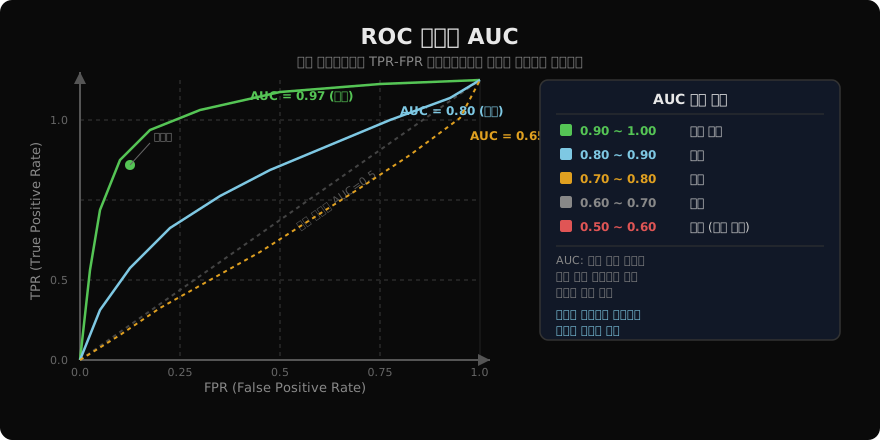
ROC(Receiver Operating Characteristic) 곡선은 X축에 FPR(False Positive Rate), Y축에 TPR(True Positive Rate, 재현율)을 놓고 임계값을 0에서 1까지 변화시킬 때의 궤적을 그린다.
- TPR(민감도, Recall) = TP / (TP + FN) — 실제 양성 중 탐지한 비율
- FPR(1-특이도) = FP / (FP + TN) — 실제 음성 중 잘못 양성으로 판단한 비율
임계값을 낮추면 더 많은 것을 양성으로 선언하므로 TPR과 FPR이 모두 올라가고, 높이면 둘 다 내려간다. 이 트레이드오프의 궤적이 ROC 곡선이다.
AUC의 확률론적 의미
AUC(Area Under the ROC Curve)는 ROC 곡선 아래 면적으로, 0부터 1 사이의 값을 갖는다. 단순히 면적이 아니라 직관적인 확률로 해석할 수 있다.
AUC = 임의로 선택한 양성 샘플이 임의로 선택한 음성 샘플보다 더 높은 점수를 받을 확률
AUC=0.85라면, 아무 양성 샘플과 아무 음성 샘플을 골랐을 때 모델이 양성 샘플에 더 높은 점수를 줄 확률이 85%라는 뜻이다. AUC=0.5는 동전 던지기 수준(랜덤 분류기)이고, AUC=1.0은 완벽한 분리다.
기본 구현
from sklearn.linear_model import LogisticRegression
from sklearn.ensemble import RandomForestClassifier
from sklearn.metrics import (roc_curve, roc_auc_score,
                              average_precision_score)
from sklearn.preprocessing import StandardScaler
from sklearn.pipeline import Pipeline
from sklearn.model_selection import train_test_split
from sklearn.datasets import load_breast_cancer

X, y = load_breast_cancer(return_X_y=True)
X_train, X_test, y_train, y_test = train_test_split(
    X, y, test_size=0.2, stratify=y, random_state=42)

# 두 모델 비교
models = {
    'LR':  Pipeline([('s', StandardScaler()),
                     ('m', LogisticRegression(max_iter=1000))]),
    'RF':  RandomForestClassifier(n_estimators=200, random_state=42)
}

for name, m in models.items():
    m.fit(X_train, y_train)
    y_score = m.predict_proba(X_test)[:, 1]

    auc = roc_auc_score(y_test, y_score)
    ap  = average_precision_score(y_test, y_score)
    fpr, tpr, thresholds = roc_curve(y_test, y_score)

    print(f"{name}: ROC-AUC={auc:.4f}  PR-AUC={ap:.4f}")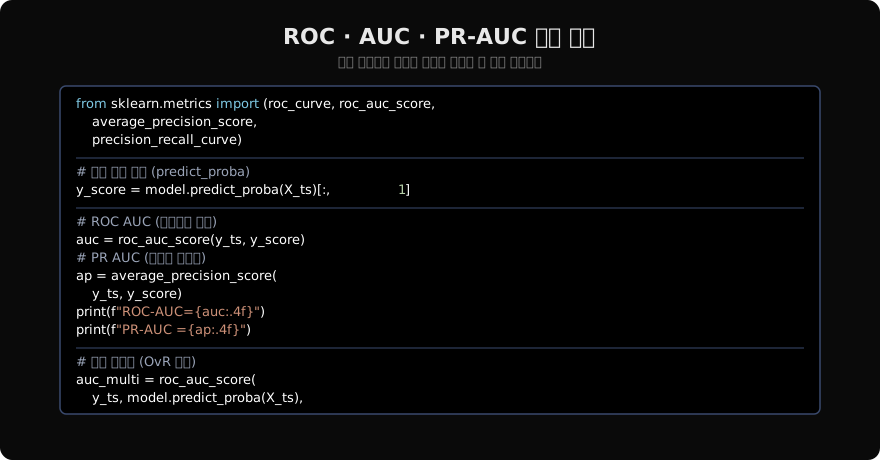
최적 임계값 찾기
실제 배포할 때는 어떤 임계값을 사용할지 결정해야 한다. 목적에 따라 최적 임계값이 다르다.
import numpy as np
from sklearn.metrics import roc_curve, precision_recall_curve

y_score = model.predict_proba(X_test)[:, 1]

# 방법 1: Youden's J 통계량 (TPR - FPR 최대화)
fpr, tpr, thresholds = roc_curve(y_test, y_score)
j_scores = tpr - fpr
best_idx  = np.argmax(j_scores)
best_thr_youden = thresholds[best_idx]
print(f"Youden 임계값: {best_thr_youden:.4f}")
print(f"  TPR={tpr[best_idx]:.4f}, FPR={fpr[best_idx]:.4f}")

# 방법 2: F1이 최대인 임계값
precisions, recalls, pr_thresholds = precision_recall_curve(
    y_test, y_score)
f1_scores = (2 * precisions * recalls /
             (precisions + recalls + 1e-9))
best_f1_idx = np.argmax(f1_scores[:-1])
best_thr_f1 = pr_thresholds[best_f1_idx]
print(f"F1 최적 임계값: {best_thr_f1:.4f}")

# 방법 3: FPR ≤ 0.05 제약 하에 TPR 최대화
constraint_mask = fpr <= 0.05
if constraint_mask.any():
    constrained_idx = np.argmax(tpr[constraint_mask])
    idx = np.where(constraint_mask)[0][constrained_idx]
    print(f"FPR≤5% 제약 임계값: {thresholds[idx]:.4f}"
          f"  TPR={tpr[idx]:.4f}")
PR-AUC: 극심한 불균형에서의 대안
양성 클래스 비율이 매우 낮을 때(1% 미만) ROC-AUC는 지나치게 낙관적일 수 있다. FPR 계산에 TN이 크게 관여하는데, 음성 샘플이 압도적으로 많으면 TN이 크게 나와 FPR이 낮게 유지되기 때문이다. 이때는 PR(Precision-Recall) 곡선과 PR-AUC를 사용한다.
from sklearn.metrics import (precision_recall_curve,
                              average_precision_score)

precisions, recalls, thresholds = precision_recall_curve(
    y_test, y_score)

# Average Precision: PR 곡선 아래 면적
ap = average_precision_score(y_test, y_score)
print(f"Average Precision: {ap:.4f}")

# 비율이 낮은 클래스의 기준선
baseline = y_test.mean()
print(f"랜덤 기준선 AP: {baseline:.4f}")
# AP가 기준선보다 얼마나 높은지가 중요
PR 곡선의 기준선은 y.mean()(양성 비율)이다. ROC에서 랜덤 기준선이 AUC=0.5인 것처럼, PR에서는 AP=양성비율이 랜덤 기준선이 된다.
다중 클래스 ROC-AUC
클래스가 3개 이상일 때는 One-vs-Rest(OvR) 또는 One-vs-One(OvO) 방식으로 확장한다.
from sklearn.metrics import roc_auc_score

# 다중 클래스: 각 클래스 확률 필요
y_proba_multi = model.predict_proba(X_test)  # (n, n_classes)

# macro: 클래스를 동등하게
auc_macro = roc_auc_score(y_test, y_proba_multi,
                           multi_class='ovr',
                           average='macro')

# weighted: 클래스 샘플 수 가중
auc_weighted = roc_auc_score(y_test, y_proba_multi,
                              multi_class='ovr',
                              average='weighted')

print(f"Macro AUC:    {auc_macro:.4f}")
print(f"Weighted AUC: {auc_weighted:.4f}")
ROC-AUC vs 다른 지표 선택 가이드
| 상황 | 권장 지표 |
|---|---|
| 클래스 균형, 임계값 고정 | F1, Accuracy |
| 임계값 선택이 유동적 | ROC-AUC |
| 양성 비율 < 5% | PR-AUC (Average Precision) |
| 비용에 민감한 임계값 | Youden’s J, 비용-민감 최적화 |
| 다중 클래스 | Macro ROC-AUC |
지난 글: 혼동 행렬로 분류 오류 해부하기
다음 글: 회귀 모델 평가 지표: MAE·MSE·RMSE·R² 완전 이해
읽어주셔서 감사합니다. 😊