

산술 연산 메서드: __add__, __mul__ 외
Python 산술 연산 매직 메서드 종류, 반사 메서드(radd/rmul), 복합 대입 메서드(iadd), sum() 지원을 위한 __radd__ 구현법을 설명합니다.
지난 글에서 순서 비교 메서드를 구현하는 방법을 살펴보았습니다. 이번에는 +, -, *, / 같은 산술 연산자를 클래스에 적용하는 방법을 다룹니다. 산술 연산 메서드는 일반, 반사(reflected), 복합 대입(augmented assignment) 세 가지 버전이 있습니다.
기본 이진 연산 메서드
a + b를 평가할 때 Python은 a.__add__(b)를 호출합니다. 이를 일반(forward) 메서드라고 합니다.
class Vector:
    def __init__(self, x, y):
        self.x, self.y = x, y

    def __repr__(self):
        return f"Vector({self.x}, {self.y})"

    def __add__(self, other):
        return Vector(self.x + other.x, self.y + other.y)

    def __sub__(self, other):
        return Vector(self.x - other.x, self.y - other.y)

v1 = Vector(1, 2)
v2 = Vector(3, 4)
print(v1 + v2)   # Vector(4, 6)
print(v2 - v1)   # Vector(2, 2)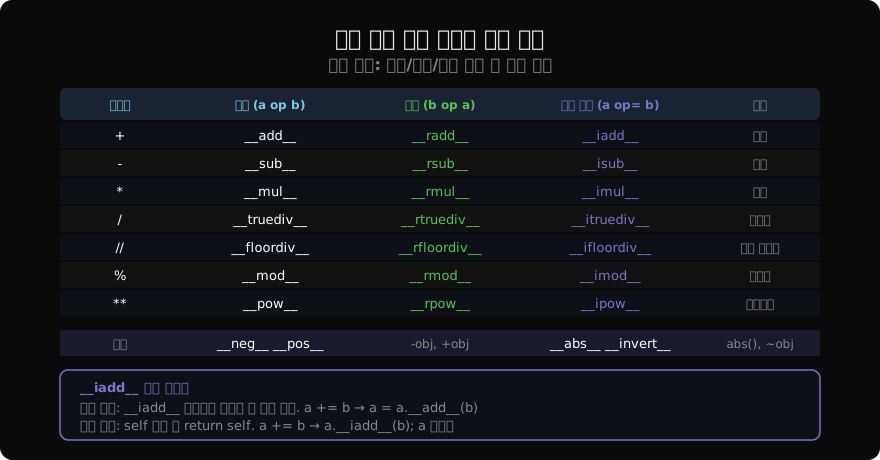
반사 메서드: radd, rmul
a + b에서 a.__add__(b)가 NotImplemented를 반환하면 Python은 b.__radd__(a)를 시도합니다. 이를 통해 다른 타입과의 연산을 지원할 수 있습니다.
스칼라 곱셈(3 * v)을 지원하는 전형적인 예입니다.
class Vector:
    def __init__(self, x, y):
        self.x, self.y = x, y

    def __mul__(self, scalar):
        if isinstance(scalar, (int, float)):
            return Vector(self.x * scalar, self.y * scalar)
        return NotImplemented

    def __rmul__(self, scalar):  # 3 * v 지원
        return self.__mul__(scalar)

v = Vector(1, 2)
print(v * 3)     # Vector(3, 6) — __mul__
print(3 * v)     # Vector(3, 6) — __rmul__
int.__mul__(3, v)는 Vector를 알지 못하므로 NotImplemented를 반환합니다. 그러면 Python이 v.__rmul__(3)을 호출합니다.
sum()을 지원하는 radd
sum([a, b, c])는 내부적으로 0 + a + b + c로 계산됩니다. 첫 번째 연산 0 + a에서 0.__add__(a)가 NotImplemented를 반환하고, Python이 a.__radd__(0)을 호출합니다.
class Money:
    def __init__(self, amount, currency="KRW"):
        self.amount   = amount
        self.currency = currency

    def __repr__(self):
        return f"Money({self.amount}, {self.currency!r})"

    def __add__(self, other):
        if not isinstance(other, Money):
            return NotImplemented
        if self.currency != other.currency:
            raise ValueError("currency mismatch")
        return Money(self.amount + other.amount, self.currency)

    def __radd__(self, other):
        if other == 0:      # sum()의 초기값 0 처리
            return self
        return self.__add__(other)

bills = [Money(100), Money(200), Money(300)]
print(sum(bills))   # Money(600, 'KRW')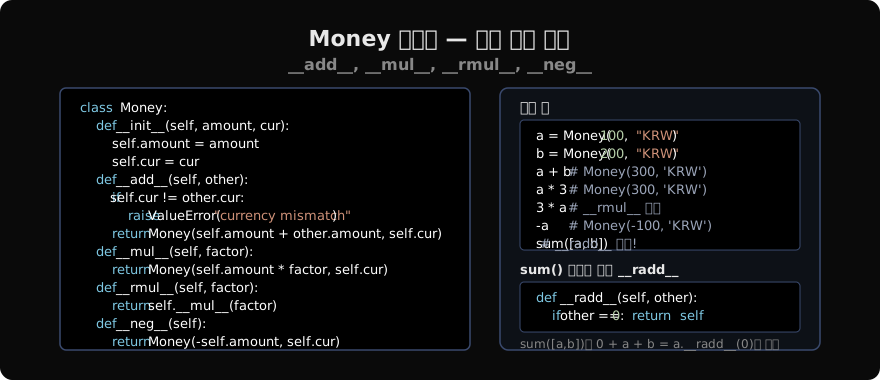
복합 대입 메서드: iadd, imul
a += b는 기본적으로 a = a + b와 동일하지만, __iadd__를 정의하면 새 객체를 만들지 않고 a를 in-place로 수정할 수 있습니다.
class MutableVector:
    def __init__(self, x, y):
        self.x, self.y = x, y

    def __repr__(self):
        return f"MutableVector({self.x}, {self.y})"

    def __iadd__(self, other):
        self.x += other.x
        self.y += other.y
        return self   # 반드시 self 반환

v = MutableVector(1, 2)
original_id = id(v)
v += MutableVector(3, 4)
print(v)            # MutableVector(4, 6)
print(id(v) == original_id) # True — 같은 객체__iadd__가 없으면 a += b는 a = a.__add__(b)로 처리되어 새 객체가 생성됩니다.
불변 타입에서는 __iadd__를 구현하지 않거나, return self + other처럼 새 객체를 반환합니다.
단항 연산자
-obj는 obj.__neg__(), +obj는 obj.__pos__(), abs(obj)는 obj.__abs__()를 호출합니다.
class Temperature:
    def __init__(self, celsius):
        self.c = celsius

    def __repr__(self):
        return f"Temperature({self.c}°C)"

    def __neg__(self):
        return Temperature(-self.c)

    def __abs__(self):
        return Temperature(abs(self.c))

t = Temperature(-20)
print(-t)    # Temperature(20°C)
print(abs(t))  # Temperature(20°C)
NotImplemented vs NotImplementedError
반사 메서드에서 처리할 수 없는 타입을 만나면 return NotImplemented(값)를 사용합니다. raise NotImplementedError()와 다릅니다.
NotImplemented: Python에게 “다른 방법을 시도하라”고 신호를 보내는 단일 객체NotImplementedError: 추상 메서드가 구현되지 않았음을 나타내는 예외
지난 글: 비교 메서드: lt, le, gt, ge
다음 글: 컨텍스트 매니저 프로토콜: __enter__와 exit
읽어주셔서 감사합니다. 😊
PALDYN / ARTICLE AI
글의 개념, 수식, 코드에 대해 물어보세요.
질문과 관련된 문단을 골라 답변의 문맥으로 사용합니다.생각 중 · 0초