

contextlib.suppress와 redirect
contextlib.suppress로 특정 예외를 억제하는 방법, redirect_stdout/redirect_stderr로 출력을 리다이렉트하는 방법, nullcontext 활용법을 설명합니다.
지난 글에서 @contextmanager 데코레이터로 제너레이터 함수를 컨텍스트 매니저로 변환하는 방법을 살펴봤다. 이번에는 contextlib이 제공하는 즉시 사용 가능한 유틸리티인 suppress, redirect_stdout, nullcontext를 살펴본다.
contextlib.suppress — 예외 억제
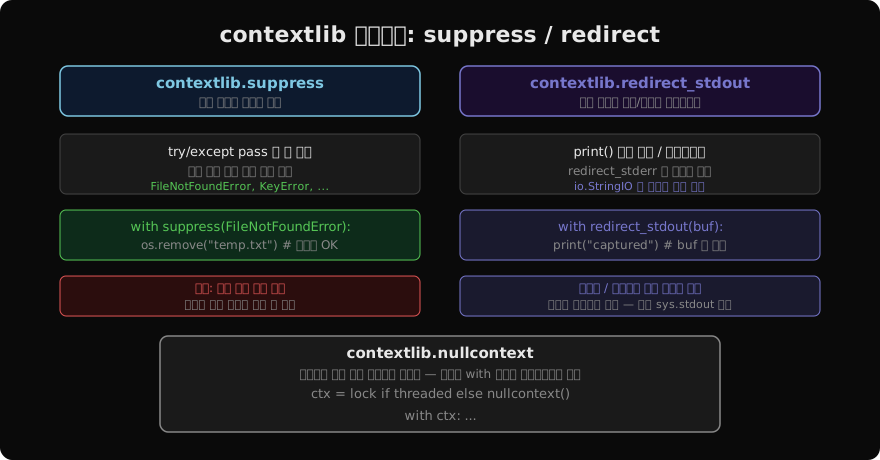
suppress는 지정한 예외가 발생해도 조용히 무시하고 넘어가는 컨텍스트 매니저다. try/except: pass 패턴을 한 줄로 줄여준다.
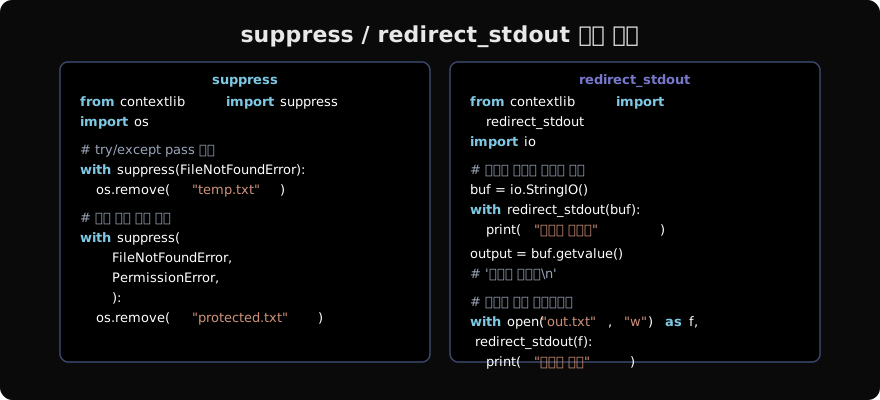
from contextlib import suppress
import os

# 기존 패턴
try:
    os.remove("temp.txt")
except FileNotFoundError:
    pass

# suppress 사용
with suppress(FileNotFoundError):
    os.remove("temp.txt")
두 코드는 완전히 동일하게 동작한다. suppress 쪽이 의도를 더 명확히 전달한다. “이 예외는 무시해도 괜찮다”는 의미가 코드에 드러난다.
여러 예외 동시 억제
suppress는 여러 예외 타입을 동시에 받을 수 있다.
with suppress(FileNotFoundError, PermissionError):
    os.remove("protected.txt")
contextlib.redirect_stdout — 출력 리다이렉트
redirect_stdout은 with 블록 안의 print() 출력을 다른 스트림으로 돌린다.
import io
from contextlib import redirect_stdout

buf = io.StringIO()
with redirect_stdout(buf):
    print("캡처된 텍스트")
    print("두 번째 줄")

output = buf.getvalue()
print(repr(output))
# '캡처된 텍스트\n두 번째 줄\n'
테스트 코드에서 서드파티 라이브러리의 출력을 캡처하거나, 명령어 출력을 파일로 저장할 때 유용하다.
redirect_stderr
표준 에러도 같은 방식으로 리다이렉트한다.
import sys
import io
from contextlib import redirect_stderr

err_buf = io.StringIO()
with redirect_stderr(err_buf):
    print("에러 메시지", file=sys.stderr)

print(err_buf.getvalue())
# '에러 메시지\n'
redirect_stdout 주의사항
redirect_stdout은 내부적으로 sys.stdout을 전역으로 교체한다. 따라서:
- 스레드 안전하지 않다 — 멀티스레드 환경에서 다른 스레드의 출력도 영향을 받을 수 있다
- 블록을 벗어나면 자동 복원된다
C확장이 직접libc의printf를 쓰는 경우 캡처되지 않는다
# 테스트에서 출력 캡처 예
import unittest
from contextlib import redirect_stdout
import io

class TestOutput(unittest.TestCase):
    def test_print_output(self):
        buf = io.StringIO()
        with redirect_stdout(buf):
            my_function()
        self.assertIn("expected", buf.getvalue())
contextlib.nullcontext — 아무것도 안 하는 컨텍스트
nullcontext는 __enter__와 __exit__이 아무것도 하지 않는 컨텍스트 매니저다. 조건부 with 문에서 자리표시자로 사용한다.
from contextlib import nullcontext
import threading

def process_data(data, lock=None):
    # lock 이 있으면 잠그고, 없으면 nullcontext 로 그냥 실행
    ctx = lock if lock is not None else nullcontext()
    with ctx:
return expensive_operation(data)None을 with 문에 넣으면 AttributeError가 나지만 nullcontext()는 안전하게 동작한다. 선택적 잠금이나 트레이싱 도구를 조건부로 활성화할 때 자주 쓰인다.
suppress 남용 주의
suppress를 너무 넓게 쓰면 버그를 숨길 수 있다.
# 나쁜 예: 너무 넓은 억제
with suppress(Exception):   # 모든 예외 억제 → 디버깅 불가
    do_something()

# 좋은 예: 명확한 예외만 억제
with suppress(FileNotFoundError):
    os.remove("cache.tmp")   # 없는 파일 삭제는 OK
억제할 예외의 의미가 명확하고, 그 예외가 실제로 무시해도 괜찮은 경우에만 suppress를 쓴다.
요약
| 도구 | 용도 |
|---|---|
suppress(ExcType) | 특정 예외 억제 (try/except pass 대체) |
redirect_stdout(stream) | print() 출력을 지정 스트림으로 |
redirect_stderr(stream) | stderr 출력을 지정 스트림으로 |
nullcontext() | 아무것도 안 하는 더미 컨텍스트 |
지난 글: contextlib.contextmanager 데코레이터
다음 글: ExitStack — 동적 컨텍스트 매니저 스택
읽어주셔서 감사합니다. 😊
PALDYN / ARTICLE AI
글의 개념, 수식, 코드에 대해 물어보세요.
질문과 관련된 문단을 골라 답변의 문맥으로 사용합니다.생각 중 · 0초