

Spring AOP 실전 활용 사례: 로깅·트랜잭션·캐싱·보안을 AOP로 분리하기
Spring AOP를 실무에서 활용하는 6가지 핵심 패턴—요청 로깅, 트랜잭션 관리, 캐싱, 메서드 보안, Micrometer 메트릭, Circuit Breaker—을 완성된 코드와 함께 설명합니다.
지난 글에서 Pointcut 표현식의 지시자 6가지와 와일드카드 규칙을 완전히 정리했습니다. 이번 글에서는 실제 프로젝트에서 AOP가 어떻게 쓰이는지 완성된 사례 코드를 중심으로 살펴봅니다. 각 사례는 독립적이므로 필요한 부분만 골라 참고해도 됩니다.
AOP 적용 사례 전체 지도
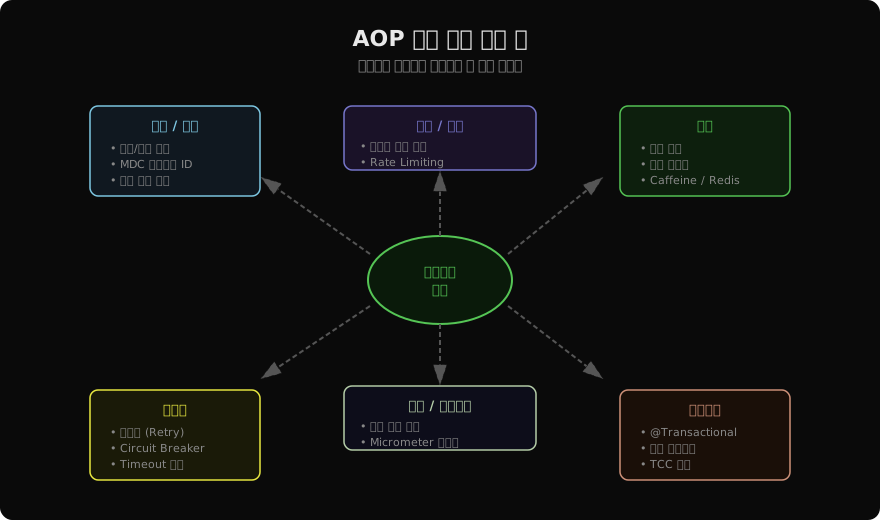
Spring 생태계에서 AOP가 자동 적용되는 기능은 @Transactional, @Cacheable, @Async, @Scheduled, Spring Security의 @PreAuthorize 등 매우 많습니다. 이미 그 혜택을 누리고 있으면서도 직접 Aspect를 작성하지 않는 경우가 많은데, 원리를 알면 자신만의 횡단 관심사를 같은 방식으로 분리할 수 있습니다.
사례 1: 구조적 로깅 + 분산 추적
MDC를 활용해 요청 단위 추적 ID를 모든 로그에 자동 삽입합니다.
@Aspect
@Component
@Order(Ordered.HIGHEST_PRECEDENCE + 10)
public class StructuredLoggingAspect {

    private static final Logger log =
            LoggerFactory.getLogger(StructuredLoggingAspect.class);

    @Around("within(@org.springframework.stereotype.Service *) "
          + "&& execution(public * *(..))")
    public Object structuredLog(ProceedingJoinPoint jp) throws Throwable {
        String traceId = Optional
                .ofNullable(MDC.get("traceId"))
                .orElseGet(() -> UUID.randomUUID().toString().substring(0, 8));

        MDC.put("traceId",  traceId);
        MDC.put("method",   jp.getSignature().toShortString());
        MDC.put("class",    jp.getTarget().getClass().getSimpleName());

        long start = System.nanoTime();
        try {
            Object result = jp.proceed();
            long ms = (System.nanoTime() - start) / 1_000_000;
            log.info("OK duration={}ms", ms);
            return result;
        } catch (Throwable t) {
            log.error("FAIL error={}", t.getMessage());
            throw t;
        } finally {
            MDC.remove("method");
            MDC.remove("class");
        }
    }
}logback.xml에서 %X{traceId}로 MDC 값을 출력하면 Kibana나 CloudWatch에서 traceId 기준으로 요청 흐름 전체를 추적할 수 있습니다.
사례 2: 커스텀 캐싱 (Redis + TTL 제어)
Spring의 @Cacheable은 캐시 키 생성·TTL 제어 면에서 한계가 있습니다. 직접 작성하면 완전히 제어할 수 있습니다.
@Target(ElementType.METHOD)
@Retention(RetentionPolicy.RUNTIME)
public @interface Cached {
    String key();              // SpEL 표현식
    long ttlSeconds() default 300;
    Class<?> valueType();      // 역직렬화 타입
}

@Aspect
@Component
public class CustomCacheAspect {

    private final RedisTemplate<String, String> redis;
    private final ObjectMapper objectMapper;
    private final ExpressionParser parser = new SpelExpressionParser();

    @Around("@annotation(cached)")
    public Object cache(ProceedingJoinPoint jp,
                        Cached cached) throws Throwable {
        String cacheKey = resolveKey(jp, cached.key());

        // 캐시 히트
        String json = redis.opsForValue().get(cacheKey);
        if (json != null) {
            return objectMapper.readValue(json, cached.valueType());
        }

        // 캐시 미스 → 실행 후 저장
        Object result = jp.proceed();
        if (result != null) {
            redis.opsForValue().set(
                    cacheKey,
                    objectMapper.writeValueAsString(result),
                    Duration.ofSeconds(cached.ttlSeconds())
            );
        }
        return result;
    }

    private String resolveKey(ProceedingJoinPoint jp, String keyExpr) {
        MethodSignature sig    = (MethodSignature) jp.getSignature();
        EvaluationContext ctx  = new StandardEvaluationContext();
        String[] paramNames    = sig.getParameterNames();
        Object[] args          = jp.getArgs();
        for (int i = 0; i < paramNames.length; i++) {
            ctx.setVariable(paramNames[i], args[i]);
        }
        return parser.parseExpression(keyExpr).getValue(ctx, String.class);
    }
}

// 사용
@Service
public class ProductService {

    @Cached(key = "'product:' + #id", ttlSeconds = 600, valueType = Product.class)
    public Product findById(Long id) {
        return productRepository.findById(id).orElseThrow();
    }
}
사례 3: Micrometer 메트릭 수집
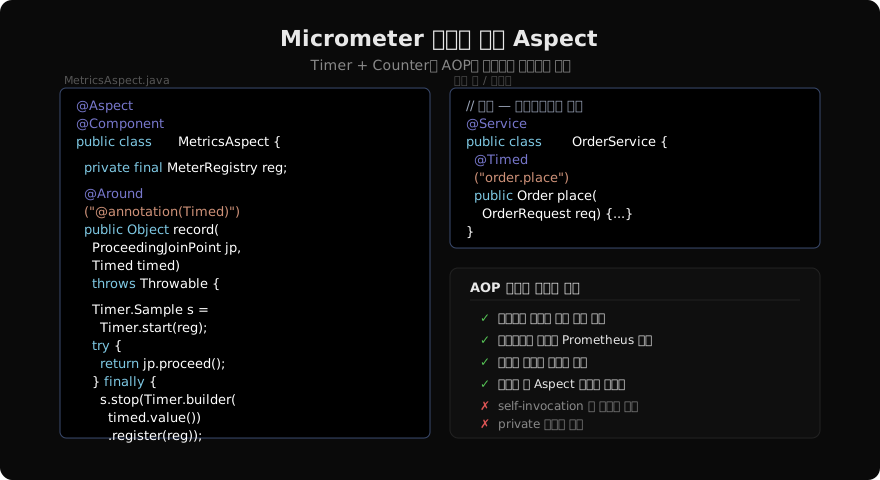
@Target(ElementType.METHOD)
@Retention(RetentionPolicy.RUNTIME)
public @interface Timed {
    String value();                    // 메트릭 이름
    String[] tags() default {};        // key=value 쌍
}

@Aspect
@Component
public class MetricsAspect {

    private final MeterRegistry registry;

    @Around("@annotation(timed)")
    public Object record(ProceedingJoinPoint jp,
                         Timed timed) throws Throwable {
        Timer.Sample sample = Timer.start(registry);
        String status = "success";
        try {
            return jp.proceed();
        } catch (Throwable t) {
            status = "error";
            throw t;
        } finally {
            String[] rawTags = timed.tags();
            String[] allTags = Arrays.copyOf(rawTags, rawTags.length + 2);
            allTags[rawTags.length]     = "status";
            allTags[rawTags.length + 1] = status;

            sample.stop(Timer.builder(timed.value())
                    .tags(allTags)
                    .register(registry));
        }
    }
}

// 사용 — 비즈니스 코드에 계측 코드 전혀 없음
@Service
public class OrderService {

    @Timed(value = "order.place", tags = {"layer", "service"})
    public Order place(OrderRequest req) {
        // 순수 비즈니스 로직만
        validateStock(req);
        Order order = new Order(req);
        orderRepository.save(order);
        return order;
    }
}
Prometheus + Grafana 스택과 연결하면 order_place_seconds_sum, order_place_seconds_count, order_place_seconds_bucket 등의 히스토그램이 자동으로 수집됩니다.
사례 4: Circuit Breaker (단순 구현)
Resilience4j를 사용하지 않고 AOP로 간단한 Circuit Breaker를 구현해 원리를 이해할 수 있습니다.
@Aspect
@Component
public class CircuitBreakerAspect {

    private final Map<String, CircuitState> states = new ConcurrentHashMap<>();

    @Around("@annotation(com.example.annotation.CircuitBreaker)")
    public Object breaker(ProceedingJoinPoint jp) throws Throwable {
        String key = jp.getSignature().toShortString();
        CircuitState state = states.computeIfAbsent(key, k -> new CircuitState());

        if (state.isOpen()) {
            if (state.shouldAttemptReset()) {
                state.halfOpen();
            } else {
                throw new CircuitOpenException("Circuit open: " + key);
            }
        }

        try {
            Object result = jp.proceed();
            state.recordSuccess();
            return result;
        } catch (Throwable t) {
            state.recordFailure();
            throw t;
        }
    }

    static class CircuitState {
        private static final int FAILURE_THRESHOLD = 5;
        private static final long RESET_TIMEOUT_MS = 30_000;

        private final AtomicInteger failures = new AtomicInteger(0);
        private volatile boolean open = false;
        private volatile long openedAt = 0;

        boolean isOpen() { return open; }

        boolean shouldAttemptReset() {
            return System.currentTimeMillis() - openedAt > RESET_TIMEOUT_MS;
        }

        void halfOpen() { open = false; }

        void recordSuccess() { failures.set(0); open = false; }

        void recordFailure() {
            if (failures.incrementAndGet() >= FAILURE_THRESHOLD) {
                open = true;
                openedAt = System.currentTimeMillis();
            }
        }
    }
}
실무에서는 Resilience4j의 @CircuitBreaker를 사용하는 것이 훨씬 낫습니다. 이 구현은 원리 학습용입니다.
사례 5: 멱등성(Idempotency) 보장
HTTP PUT/POST에서 클라이언트가 동일 요청을 재시도할 때 중복 처리를 막는 패턴입니다.
@Target(ElementType.METHOD)
@Retention(RetentionPolicy.RUNTIME)
public @interface Idempotent {
    String keyHeader() default "Idempotency-Key";
    long ttlMinutes() default 60;
}

@Aspect
@Component
public class IdempotencyAspect {

    private final RedisTemplate<String, String> redis;

    @Around("@annotation(idempotent)")
    public Object enforce(ProceedingJoinPoint jp,
                          Idempotent idempotent) throws Throwable {
        HttpServletRequest request = getCurrentRequest();
        String idempotencyKey = request.getHeader(idempotent.keyHeader());

        if (idempotencyKey == null || idempotencyKey.isBlank()) {
            return jp.proceed();    // 키 없으면 그냥 통과
        }

        String redisKey = "idempotent:" + idempotencyKey;
        Boolean isNew = redis.opsForValue()
                .setIfAbsent(redisKey, "processing",
                             Duration.ofMinutes(idempotent.ttlMinutes()));

        if (Boolean.FALSE.equals(isNew)) {
            // 이미 처리 중이거나 완료된 요청
            String cachedResult = redis.opsForValue().get(redisKey + ":result");
            if (cachedResult != null) {
                return objectMapper.readValue(cachedResult, Object.class);
            }
            throw new DuplicateRequestException("이미 처리 중인 요청: " + idempotencyKey);
        }

        try {
            Object result = jp.proceed();
            String resultJson = objectMapper.writeValueAsString(result);
            redis.opsForValue().set(redisKey + ":result", resultJson,
                                    Duration.ofMinutes(idempotent.ttlMinutes()));
            return result;
        } catch (Throwable t) {
            redis.delete(redisKey);   // 실패 시 키 삭제 (재시도 허용)
            throw t;
        }
    }

    private HttpServletRequest getCurrentRequest() {
        return ((ServletRequestAttributes)
                RequestContextHolder.currentRequestAttributes()).getRequest();
    }
}
사례 6: 분산 환경 분산 락
여러 인스턴스에서 동시에 실행되면 안 되는 작업(예: 배치 잡, 재고 감소)에 Redis 분산 락을 AOP로 적용합니다.
@Target(ElementType.METHOD)
@Retention(RetentionPolicy.RUNTIME)
public @interface DistributedLock {
    String key();               // SpEL
    long timeoutSeconds() default 5;
    long leaseSeconds() default 30;
}

@Aspect
@Component
public class DistributedLockAspect {

    private final RedissonClient redisson;
    private final ExpressionParser parser = new SpelExpressionParser();

    @Around("@annotation(lock)")
    public Object withLock(ProceedingJoinPoint jp,
                           DistributedLock lock) throws Throwable {
        String lockKey = "lock:" + resolveKey(jp, lock.key());
        RLock rLock   = redisson.getLock(lockKey);

        boolean acquired = rLock.tryLock(
                lock.timeoutSeconds(), lock.leaseSeconds(), TimeUnit.SECONDS);
        if (!acquired) {
            throw new LockAcquisitionException("락 획득 실패: " + lockKey);
        }
        try {
            return jp.proceed();
        } finally {
            if (rLock.isHeldByCurrentThread()) {
                rLock.unlock();
            }
        }
    }

    private String resolveKey(ProceedingJoinPoint jp, String expr) {
        MethodSignature sig   = (MethodSignature) jp.getSignature();
        EvaluationContext ctx = new StandardEvaluationContext();
        String[] names        = sig.getParameterNames();
        Object[] args         = jp.getArgs();
        for (int i = 0; i < names.length; i++) ctx.setVariable(names[i], args[i]);
        return parser.parseExpression(expr).getValue(ctx, String.class);
    }
}

// 사용
@Service
public class InventoryService {

    @DistributedLock(key = "'product:stock:' + #productId")
    @Transactional
    public void decrease(Long productId, int quantity) {
        Product product = productRepository.findById(productId).orElseThrow();
        product.decreaseStock(quantity);
    }
}
사례별 Advice 타입 선택 가이드
| 사례 | 권장 Advice | 이유 |
|---|---|---|
| 로깅 / 실행시간 | @Around | 전·후 모두 처리 + 예외 캡처 |
| 입력 검증 | @Before | 실패 시 예외로 실행 차단 |
| 결과 감사 | @AfterReturning | 정상 반환값 필요, 예외 시 불필요 |
| 예외 알림 | @AfterThrowing | 예외 타입 필터링 가능 |
| 리소스 정리 | @After | 정상·예외 무관하게 항상 실행 |
| 캐싱 / 락 | @Around | 실행 여부 자체를 제어해야 함 |
AOP 적용 시 체크리스트
□ 대상 빈이 Spring 컨테이너가 관리하는 빈인가?
□ 대상 메서드가 public인가? (private은 프록시 불가)
□ self-invocation이 아닌가? (같은 클래스 내 호출)
□ final 클래스·메서드가 아닌가? (CGLIB 불가)
□ @Order로 여러 Aspect의 실행 순서를 명확히 했는가?
□ @Around에서 proceed()를 빠뜨리지 않았는가?
□ Pointcut 표현식이 의도한 메서드만 정확히 매칭하는가?
   (AspectJExpressionPointcut 단위 테스트로 검증)
핵심 정리
- Spring AOP는 단순 로깅부터 분산 락·Circuit Breaker까지 다양한 횡단 관심사를 비즈니스 로직과 완전히 분리 가능
@Around는 실행 여부까지 제어하므로 캐싱·락·Circuit Breaker에 필수- 커스텀 어노테이션 +
@annotation의 파라미터 바인딩 조합이 가장 유연한 패턴 - Micrometer 메트릭, 분산 락, 멱등성 보장처럼 인프라 횡단 관심사는 AOP로 분리하면 비즈니스 코드가 극적으로 단순해짐
- 적용 전 체크리스트(public, 비 self-invocation, 비 final)를 항상 확인
지난 글: Spring AOP Pointcut 표현식 심화: execution·within·@annotation 완전 정복
다음 글: Servlet · Filter · Listener 완전 정복: 웹 컨테이너 3요소의 역할과 실전 활용
읽어주셔서 감사합니다. 😊
PALDYN / ARTICLE AI
글의 개념, 수식, 코드에 대해 물어보세요.
질문과 관련된 문단을 골라 답변의 문맥으로 사용합니다.생각 중 · 0초