

TypeScript 원시 타입 완전 정복: string, number, boolean 외 4종
TypeScript의 7가지 원시 타입(string, number, boolean, bigint, symbol, null, undefined)을 완전히 정리합니다. 소문자 vs 대문자 타입 주의사항, strictNullChecks 동작, 원시 타입별 유용한 패턴을 다룹니다.
지난 글에서 TypeScript 타입 시스템의 전체 구조를 파악했다. 이번 글에서는 원시 타입(Primitive Types) 7가지를 하나씩 깊이 살펴본다. 원시 타입은 TypeScript 타입 시스템의 기초이며, 이를 정확히 이해해야 고급 타입 기능도 제대로 쓸 수 있다.
원시 타입이란
원시 타입은 변경 불가능한(immutable) 단순 값을 나타낸다. 객체와 달리 메모리에 값 자체가 저장된다(값 타입).
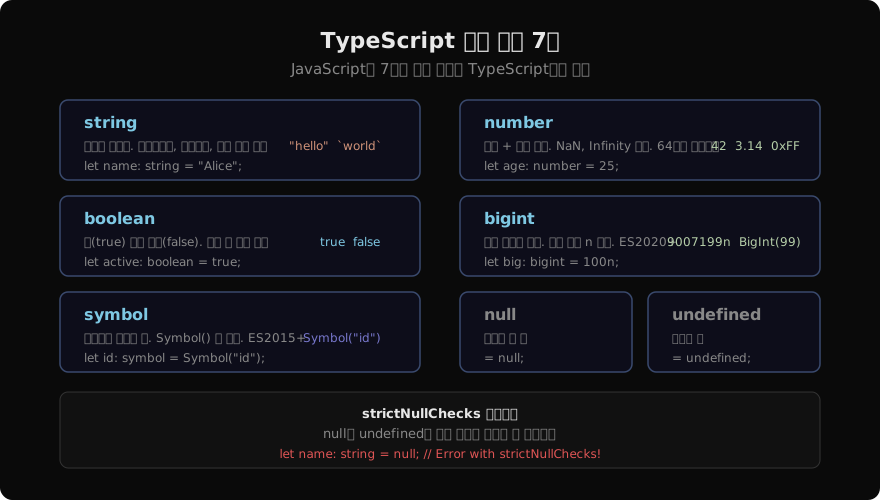
JavaScript의 7가지 원시 타입은 TypeScript에서도 그대로 사용된다.
string
텍스트 데이터를 나타낸다. 작은따옴표, 큰따옴표, 백틱(템플릿 리터럴) 모두 string 타입이다.
// 기본 string
let firstName: string = "Alice";
let lastName: string = 'Park';
let fullName: string = `${firstName} ${lastName}`;

// 멀티라인 문자열
let longText: string = `
  이것은 여러 줄에 걸친
  긴 텍스트입니다.
`;

// string 메서드 (TypeScript가 타입을 알기 때문에 자동완성 제공)
console.log(firstName.toUpperCase());  // "ALICE"
console.log(firstName.length);         // 5
console.log(firstName.includes("li")); // true
console.log(firstName.slice(0, 3));    // "Ali"

// 타입 안전성
let message: string = "hello";
message = 42;    // Error: number는 string에 할당 불가
message = true;  // Error: boolean은 string에 할당 불가
리터럴 타입으로 값 범위 제한
// 특정 문자열만 허용하는 리터럴 타입
type Direction = "north" | "south" | "east" | "west";
type Lang = "en" | "ko" | "ja";

function navigate(dir: Direction): void {
  console.log(`Going ${dir}`);
}

navigate("north");   // OK
navigate("up");      // Error: "up"은 Direction에 없는 값
number
정수와 실수를 통합한 타입이다. JavaScript와 마찬가지로 64비트 IEEE 754 부동소수점 형식이다.
// 다양한 number 리터럴
let integer: number = 42;
let float: number = 3.14159;
let negative: number = -273.15;
let hex: number = 0xFF;       // 255
let octal: number = 0o377;    // 255
let binary: number = 0b11111111;  // 255
let exponential: number = 1e6;    // 1000000

// 특수 number 값
let notANumber: number = NaN;
let posInfinity: number = Infinity;
let negInfinity: number = -Infinity;

// 정밀도 문제 (JavaScript 동일)
console.log(0.1 + 0.2);  // 0.30000000000000004
안전한 정수 범위
// Number.MAX_SAFE_INTEGER 초과 시 정밀도 손실
const max = Number.MAX_SAFE_INTEGER;  // 9007199254740991
console.log(max + 1 === max + 2);     // true! (정밀도 손실)

// bigint를 사용해야 하는 경우
const bigId: bigint = 9007199254740993n;  // 정확한 값 유지
boolean
true 또는 false 두 값만 가지는 타입이다.
let isLoggedIn: boolean = false;
let hasPermission: boolean = true;
let isAdmin: boolean = Boolean(0);  // false

// 논리 연산
let canAccess: boolean = isLoggedIn && hasPermission;
let showBanner: boolean = !isLoggedIn;

// 조건문에서의 활용
function checkAccess(role: string): boolean {
  return role === "admin" || role === "moderator";
}

// 주의: Boolean 객체와 boolean 원시 타입의 차이
let a: boolean = true;           // 원시 타입 (권장)
let b: Boolean = new Boolean(true); // 객체 래퍼 (비권장)
bigint (ES2020+)
Number.MAX_SAFE_INTEGER를 초과하는 정수를 정확하게 처리해야 할 때 사용한다.
// bigint 리터럴: 숫자 뒤에 n
let large: bigint = 9007199254740993n;
let huge: bigint = BigInt("12345678901234567890");

// bigint 연산
let a: bigint = 100n;
let b: bigint = 200n;
console.log(a + b);   // 300n
console.log(a * b);   // 20000n
console.log(b / a);   // 2n (나머지 버림)

// 주의: bigint와 number는 섞을 수 없음
let num: number = 42;
let big: bigint = 100n;
let result = num + big;      // Error: 타입 혼용 불가
let result2 = BigInt(num) + big;  // OK: 명시적 변환

// 활용: 금융 계산, 암호화, 고유 ID
const transactionId: bigint = BigInt(Date.now()) * 1000000n;
symbol
유일하고 불변인 원시 값이다. 주로 객체의 고유한 키로 사용한다.
// symbol 생성: 동일한 설명을 넘겨도 서로 다른 심볼
const sym1 = Symbol("id");
const sym2 = Symbol("id");
console.log(sym1 === sym2);  // false — 절대 같지 않음

// 객체 키로 사용
const ID = Symbol("id");
const obj = {
  [ID]: "unique-123",
  name: "Alice"
};

console.log(obj[ID]);    // "unique-123"
console.log(obj.name);   // "Alice"

// 전역 심볼 레지스트리 (Symbol.for)
const sharedSym1 = Symbol.for("shared");
const sharedSym2 = Symbol.for("shared");
console.log(sharedSym1 === sharedSym2);  // true — 같은 심볼

// unique symbol: 컴파일 타임에 완전히 고유함 보장
const UNIQUE = Symbol() as const;
type UniqueType = typeof UNIQUE;
null과 undefined
TypeScript에서 null과 undefined는 별도의 타입이다.
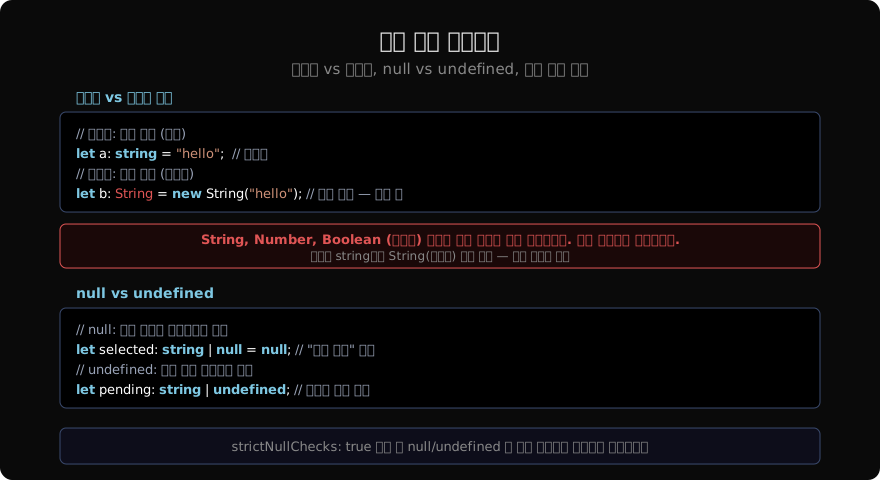
// null: 의도적으로 "값 없음"을 나타냄
let selectedItem: string | null = null;
selectedItem = "item-1";  // OK
selectedItem = null;      // OK (선택 취소)

// undefined: 아직 값이 할당되지 않음
let pending: string | undefined;  // undefined 상태
pending = "data";         // 나중에 할당

// 옵셔널 프로퍼티 (자동으로 | undefined 포함)
interface Config {
  host: string;
  port?: number;  // number | undefined
}
strictNullChecks
strict: true (또는 strictNullChecks: true) 설정 시 null과 undefined는 다른 타입에 할당할 수 없다.
// strictNullChecks: true (권장)
let name: string = null;        // Error: null은 string이 아님
let age: number = undefined;    // Error: undefined는 number가 아님

// null/undefined 허용하려면 유니언 타입으로 명시
let nullableName: string | null = null;     // OK
let optionalAge: number | undefined;        // OK

// strictNullChecks: false 에서는 (비권장)
let name2: string = null;     // OK — null이 모든 타입에 할당 가능
let age2: number = undefined; // OK — undefined도 마찬가지
null 안전하게 다루기
interface User {
  name: string;
  email: string | null;
}

// Optional chaining (?.)
function displayEmail(user: User): string {
  return user.email?.toUpperCase() ?? "이메일 없음";
  // user.email이 null이면 ?? 뒤의 기본값 반환
}

// Nullish coalescing (??)
const displayName = user.name ?? "익명";

// Non-null assertion (! — 타입 검사를 수동으로 우회)
const email = user.email!.toUpperCase();  // user.email이 null이 아님을 보장
// 주의: null이면 런타임 오류 발생 — 확실한 경우에만 사용
소문자 vs 대문자 타입
이것은 TypeScript 초보자가 자주 혼동하는 부분이다.
// 소문자 (권장): 원시 타입
let s: string = "hello";
let n: number = 42;
let b: boolean = true;

// 대문자 (비권장): 객체 래퍼 타입
let S: String = new String("hello");
let N: Number = new Number(42);
let B: Boolean = new Boolean(true);

// 문제: 소문자 타입에 대문자 타입 할당 불가
let str: string = new String("hello");  // Error!

// 대문자 타입은 실제로 객체
typeof new String("hello")  // "object" (원시 string이 아님!)
typeof "hello"               // "string"

// 결론: 항상 소문자 타입 사용
정리
TypeScript의 7가지 원시 타입은 string, number, boolean, bigint, symbol, null, undefined다. 핵심 주의사항은 세 가지다. 첫째, 항상 소문자 타입(string, number, boolean)을 사용한다. 둘째, strictNullChecks를 활성화하고 null/undefined를 유니언 타입으로 명시한다. 셋째, bigint와 number는 혼용할 수 없다. 다음 글에서는 TypeScript 고유의 특수 타입인 any, unknown, never, void를 다룬다.
지난 글: TypeScript 기본 타입: 타입 시스템의 구성 요소
다음 글: TypeScript 특수 타입: any, unknown, never, void 완전 정복
읽어주셔서 감사합니다. 😊
PALDYN / ARTICLE AI
글의 개념, 수식, 코드에 대해 물어보세요.
질문과 관련된 문단을 골라 답변의 문맥으로 사용합니다.생각 중 · 0초