

단언 함수 — asserts 키워드와 불변식 검사
TypeScript 단언 함수(Assertion Functions)의 asserts 반환 타입, assert(condition), assertDefined(val), 초기화 검사 패턴을 완전히 정리합니다.
지난 글에서 완전성 검사를 살펴봤다. 이번에는 TypeScript 3.7에서 도입된 단언 함수(Assertion Functions)를 살펴본다. 타입 가드(is 반환)와 달리 단언 함수는 조건이 거짓이면 예외를 던지고, 참이면 이후 코드에서 타입이 좁혀진다.
타입 가드 vs 단언 함수
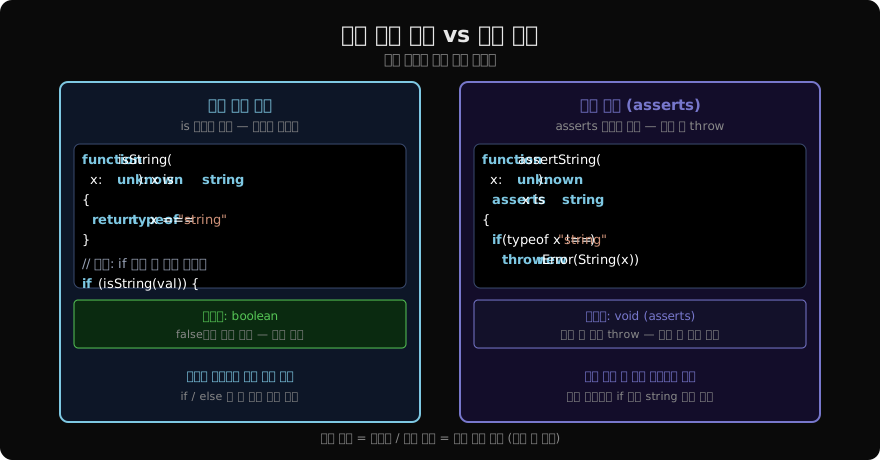
// 타입 가드 — boolean 반환, 호출부가 if로 분기해야 함
function isString(val: unknown): val is string {
  return typeof val === "string";
}

// 단언 함수 — 실패 시 예외, 성공 시 이후 코드에서 타입 좁힘
function assertIsString(val: unknown): asserts val is string {
  if (typeof val !== "string") {
    throw new TypeError(`Expected string, got ${typeof val}`);
  }
}
타입 가드는 if (isString(val)) { /* 여기서 val: string */ } 형태로 사용해야 한다. 단언 함수는 assertIsString(val) 호출 이후 줄부터 val이 string으로 좁혀진다.
asserts condition 패턴
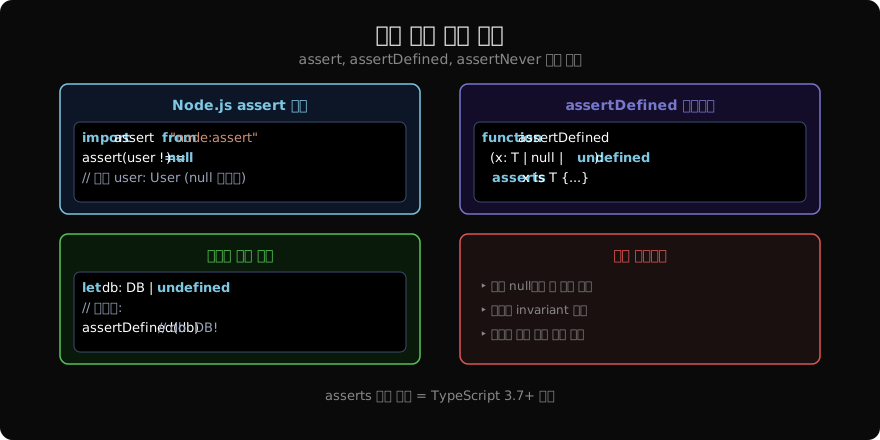
asserts condition은 Node.js의 assert 모듈처럼 불변식(invariant)을 검사하는 데 쓰인다.
function assert(condition: boolean, message?: string): asserts condition {
  if (!condition) throw new Error(message ?? "Assertion failed");
}

function processAge(age: number | null) {
  assert(age !== null, "age must not be null");
  // 이 줄부터 age: number
  console.log(age.toFixed(0));
}
asserts val is T 패턴
특정 타입임을 단언하는 함수다.
function assertDefined<T>(val: T | null | undefined, name = "value"): asserts val is T {
  if (val == null) throw new Error(`${name} must be defined`);
}

function getElement(id: string): HTMLElement {
  const el = document.getElementById(id);
  assertDefined(el, `element #${id}`);
  return el; // el: HTMLElement (null 제외됨)
}
클래스 초기화 검사
단언 함수는 클래스에서 init 메서드 이후 프로퍼티가 설정됐음을 보장할 때 특히 유용하다.
class DatabaseConnection {
  private connection: Connection | undefined;

  async init() {
    this.connection = await createConnection();
  }

  private assertReady(): asserts this is this & { connection: Connection } {
    if (!this.connection) {
      throw new Error("Database not initialized. Call init() first.");
    }
  }

  async query(sql: string) {
    this.assertReady();
    // this.connection: Connection (undefined 제외됨)
    return this.connection.execute(sql);
  }
}
실전: 입력 검증 레이어
API 핸들러에서 입력을 검증하고 이후 코드에서 타입을 보장하는 패턴이다.
type RawInput = { userId?: unknown; amount?: unknown };
type ValidatedInput = { userId: string; amount: number };

function assertValidInput(input: RawInput): asserts input is ValidatedInput {
  if (typeof input.userId !== "string" || !input.userId) {
    throw new Error("userId must be a non-empty string");
  }
  if (typeof input.amount !== "number" || input.amount <= 0) {
    throw new Error("amount must be a positive number");
  }
}

async function processPayment(raw: RawInput) {
  assertValidInput(raw);
  // raw: ValidatedInput — 이후 코드는 타입 안전
  await charge(raw.userId, raw.amount);
}
한계와 주의사항
단언 함수는 강력하지만 주의할 점이 있다. 단언이 틀려도 TypeScript는 알 수 없다 — 단언 함수가 예외를 던지지 않으면 이후 코드에서 타입이 잘못 좁혀진다. 따라서 단언 함수의 구현이 항상 정확해야 하며, 테스트로 보장하는 것이 좋다.
// 위험: 단언이 너무 관대함
function badAssert(val: unknown): asserts val is string {
  // 아무것도 하지 않음 — 타입만 좁혀짐
}
지난 글: 완전성 검사 — switch와 never로 빠진 케이스 잡기
다음 글: interface extends — 계층적 타입 설계
읽어주셔서 감사합니다. 😊
PALDYN / ARTICLE AI
글의 개념, 수식, 코드에 대해 물어보세요.
질문과 관련된 문단을 골라 답변의 문맥으로 사용합니다.생각 중 · 0초