

에이전트 아키텍처: ReAct·Plan-and-Execute·Reflexion
AI 에이전트의 주요 아키텍처 패턴 3가지(ReAct, Plan-and-Execute, Reflexion)를 비교하고, 각 패턴의 특성과 Python 구현 코드를 완전 해설합니다.
지난 글에서 AI 에이전트의 개념과 MCP 프로토콜을 소개했다. 에이전트를 실제로 구축할 때는 어떤 아키텍처 패턴을 선택하느냐가 품질과 비용을 크게 좌우한다. 이번 글에서는 현재 가장 널리 쓰이는 세 가지 에이전트 아키텍처를 코드와 함께 깊이 살펴본다.
에이전트 아키텍처를 고려해야 하는 이유
단순히 LLM에 도구를 연결하는 것만으로는 복잡한 태스크를 처리할 수 없다. 목표가 복잡할수록, 도구 실패가 잦을수록, 품질 요구가 높을수록 구조화된 아키텍처가 필요하다. 잘못된 아키텍처를 선택하면 무한 루프에 빠지거나, LLM 비용이 폭발하거나, 품질이 기대에 미치지 못한다.
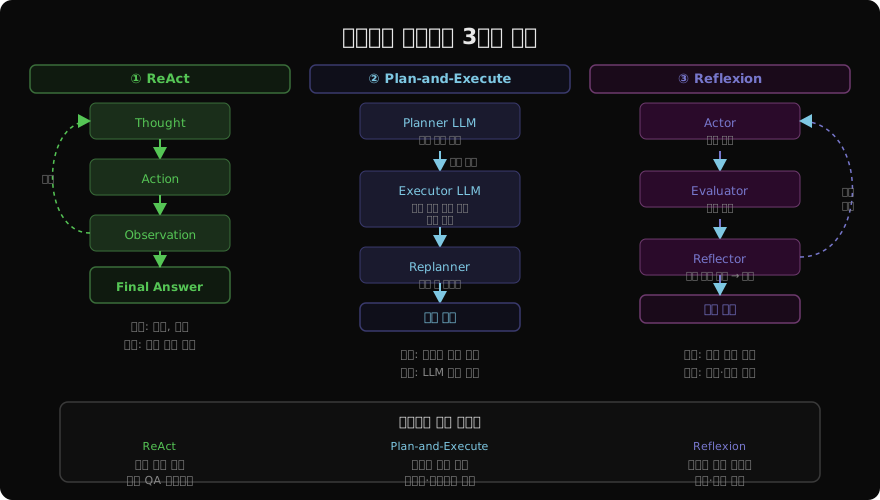
① ReAct: 가장 단순하고 범용적인 패턴
ReAct(Reasoning + Acting)는 에이전트 아키텍처의 기본이다. LLM이 Thought → Action → Observation을 반복하며 목표를 달성한다. 구현이 단순하고 대부분의 단순 태스크에 충분하다.
from anthropic import Anthropic
from typing import Any

client = Anthropic()

class ReActAgent:
    def __init__(self, tools: list[dict], tool_funcs: dict):
        self.tools = tools
        self.tool_funcs = tool_funcs
        self.max_steps = 10

    def run(self, goal: str) -> str:
        messages = [{"role": "user", "content": goal}]

        for step in range(self.max_steps):
            response = client.messages.create(
                model="claude-sonnet-4-6",
                max_tokens=4096,
                tools=self.tools,
                messages=messages,
            )

            if response.stop_reason == "end_turn":
                text_parts = [b.text for b in response.content if hasattr(b, 'text')]
                return "\n".join(text_parts)

            # 도구 호출 처리
            messages.append({"role": "assistant", "content": response.content})
            tool_results = []

            for block in response.content:
                if block.type == "tool_use":
                    func = self.tool_funcs.get(block.name)
                    if func:
                        try:
                            result = func(**block.input)
                        except Exception as e:
                            result = f"오류: {e}"

                        tool_results.append({
                            "type": "tool_result",
                            "tool_use_id": block.id,
                            "content": str(result),
                        })

            messages.append({"role": "user", "content": tool_results})

        return "최대 단계 초과"

# 사용 예
import requests

def web_search(query: str) -> str:
    return f"검색 결과: {query}에 대한 최신 정보..."

def calculate(expression: str) -> float:
    return eval(expression)  # 실제로는 안전한 수식 파서 사용

agent = ReActAgent(
    tools=[
        {"name": "web_search", "description": "웹 검색",
         "input_schema": {"type": "object", "properties": {"query": {"type": "string"}},
                          "required": ["query"]}},
        {"name": "calculate", "description": "수식 계산",
         "input_schema": {"type": "object", "properties": {"expression": {"type": "string"}},
                          "required": ["expression"]}},
    ],
    tool_funcs={"web_search": web_search, "calculate": calculate},
)
print(agent.run("2024년 한국 GDP와 그것의 제곱근을 계산해줘"))
② Plan-and-Execute: 복잡한 목표를 위한 구조화
복잡한 다단계 목표에는 ReAct 단독으로 부족하다. Plan-and-Execute는 Planner가 전체 계획을 먼저 수립하고, Executor가 각 단계를 실행하며, 실패 시 Replanner가 계획을 수정한다.
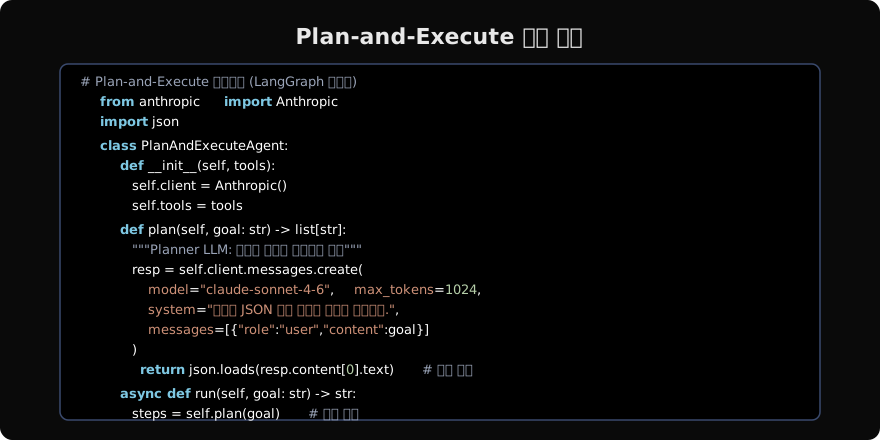
import json
from anthropic import Anthropic

client = Anthropic()

def plan(goal: str) -> list[str]:
    """Planner: 목표를 단계로 분해"""
    resp = client.messages.create(
        model="claude-sonnet-4-6",
        max_tokens=1024,
        system="""사용자 목표를 JSON 배열 형식의 실행 가능한 단계로 분해하세요.
각 단계는 구체적이고 독립적이어야 합니다.
출력 형식: ["단계1", "단계2", ...]""",
        messages=[{"role": "user", "content": f"목표: {goal}"}],
    )
    return json.loads(resp.content[0].text)

def execute_step(step: str, context: str, tools: list, tool_funcs: dict) -> str:
    """Executor: 단일 단계 실행"""
    messages = [{"role": "user", "content": f"다음 단계를 실행하세요:\n{step}\n\n이전 결과:\n{context}"}]

    while True:
        response = client.messages.create(
            model="claude-sonnet-4-6",
            max_tokens=2048,
            tools=tools,
            messages=messages,
        )

        if response.stop_reason == "end_turn":
            return " ".join(b.text for b in response.content if hasattr(b, 'text'))

        messages.append({"role": "assistant", "content": response.content})
        tool_results = []

        for block in response.content:
            if block.type == "tool_use":
                func = tool_funcs.get(block.name, lambda **k: "도구 없음")
                result = func(**block.input)
                tool_results.append({
                    "type": "tool_result",
                    "tool_use_id": block.id,
                    "content": str(result),
                })

        messages.append({"role": "user", "content": tool_results})

def replan(goal: str, steps: list[str], completed: list[str], failed_step: str) -> list[str]:
    """Replanner: 실패 시 남은 계획 재수립"""
    resp = client.messages.create(
        model="claude-sonnet-4-6",
        max_tokens=1024,
        messages=[{"role": "user", "content": f"""
목표: {goal}
완료된 단계: {completed}
실패한 단계: {failed_step}
남은 단계: {steps}

실패를 고려해 남은 계획을 JSON 배열로 재수립하세요.
"""}],
    )
    return json.loads(resp.content[0].text)

def plan_and_execute(goal: str, tools: list, tool_funcs: dict) -> str:
    """Plan-and-Execute 전체 파이프라인"""
    steps = plan(goal)
    print(f"계획: {steps}")

    completed = []
    context = ""

    while steps:
        current_step = steps.pop(0)
        try:
            result = execute_step(current_step, context, tools, tool_funcs)
            completed.append(current_step)
            context += f"\n{current_step}: {result}"
            print(f"✓ {current_step}")
        except Exception as e:
            print(f"✗ {current_step}: {e}")
            # 재계획
            steps = replan(goal, steps, completed, current_step)

    # 최종 결합
    return client.messages.create(
        model="claude-sonnet-4-6",
        max_tokens=2048,
        messages=[{"role": "user", "content": f"다음 실행 결과를 통합해 최종 답변을 작성하세요:\n{context}"}],
    ).content[0].text
③ Reflexion: 자기 반성으로 품질 향상
Reflexion은 에이전트가 자신의 실패를 분석하고 개선하는 패턴이다. 동일 태스크를 여러 번 시도하면서 이전 시도의 실패 이유를 다음 시도에 반영한다. 코딩, 수학 문제 등 정답이 명확한 태스크에 특히 효과적이다.
def reflexion_agent(task: str, max_trials: int = 3) -> str:
    """Reflexion: 자기 반성 루프"""
    reflections = []

    for trial in range(max_trials):
        # 이전 실패 반성을 컨텍스트에 포함
        reflection_context = ""
        if reflections:
            reflection_context = f"\n이전 시도 실패 분석:\n" + "\n".join(
                f"시도 {i+1}: {r}" for i, r in enumerate(reflections)
            )

        # Actor: 태스크 수행
        resp = client.messages.create(
            model="claude-opus-4-7",
            max_tokens=2048,
            messages=[{"role": "user", "content": f"""
태스크: {task}
{reflection_context}
위 반성을 참고해 더 나은 답변을 작성하세요.
"""}],
        )
        output = resp.content[0].text

        # Evaluator: 품질 평가
        eval_resp = client.messages.create(
            model="claude-sonnet-4-6",
            max_tokens=512,
            messages=[{"role": "user", "content": f"""
태스크: {task}
출력: {output}

이 출력이 태스크를 완벽히 수행했는지 평가하세요.
완벽하면 "SUCCESS", 아니면 구체적인 개선점을 JSON으로:
{{"status": "FAIL", "reason": "이유", "improvement": "개선 방법"}}
"""}],
        )
        eval_text = eval_resp.content[0].text

        if "SUCCESS" in eval_text:
            print(f"시도 {trial + 1}에 성공")
            return output

        # Reflector: 실패 원인 기록
        import re
        try:
            eval_data = json.loads(re.search(r'\{.*\}', eval_text, re.DOTALL).group())
            reflections.append(eval_data.get("improvement", "알 수 없는 실패"))
        except Exception:
            reflections.append("형식 오류")

        print(f"시도 {trial + 1} 실패, 반성: {reflections[-1]}")

    return output  # 최대 시도 후 마지막 결과 반환
아키텍처별 비교
| 패턴 | 복잡도 | 비용 | 적합한 태스크 |
|---|---|---|---|
| ReAct | 낮음 | 낮음 | 단순 QA, FAQ, 정보 조회 |
| Plan-and-Execute | 중간 | 중간 | 리서치, 다단계 작업 |
| Reflexion | 높음 | 높음 | 코딩, 수학, 고품질 필수 작업 |
실전 선택 기준
def choose_architecture(task_description: str) -> str:
    """태스크 특성에 따른 아키텍처 추천"""
    task_lower = task_description.lower()

    # 복잡도 지표
    has_multiple_steps = any(k in task_lower for k in ["계획", "단계", "분석 후", "조사 후"])
    requires_quality = any(k in task_lower for k in ["완벽", "정확", "검증", "코드 작성"])

    if requires_quality:
        return "Reflexion (품질 우선)"
    elif has_multiple_steps:
        return "Plan-and-Execute (복잡한 목표)"
    else:
        return "ReAct (단순 도구 호출)"
정리
에이전트 아키텍처는 태스크 복잡도와 품질 요구에 맞게 선택해야 한다:
- ReAct: 시작점, 대부분의 단순 태스크에 충분
- Plan-and-Execute: 다단계 목표, 병렬 실행 가능성 있는 태스크
- Reflexion: 코딩·수학 등 정답이 명확하고 품질이 중요한 태스크
세 아키텍처를 혼합하는 하이브리드 방식도 효과적이다. 예를 들어 Planner는 Plan-and-Execute로, 각 단계 실행은 ReAct로, 최종 검증은 Reflexion으로 구성할 수 있다.
지난 글: AI 에이전트와 MCP: 자율적으로 행동하는 AI 시스템
다음 글: 에이전트 도구 사용: Tool Use 완전 가이드
읽어주셔서 감사합니다. 😊